


If you’re thinking “my child has lost confidence after GCSE mock exams”, you’re not alone. Lots of teens come out of mocks feeling like they’ve “failed already” or “ruined their chances” – and lots of parents are left wondering what to say or do next. This post is all about turning disappointing mock results into calm, practical next steps, so your teen can rebuild confidence and move towards their real GCSEs feeling more in control.
What we’ll cover (in plain English)
- What GCSE mock exams are really for (and what they’re not).
- Why your child’s confidence might have crashed after their mocks.
- What to say (and what to avoid) in the first few days.
- How to turn mock results into a realistic plan for improvement.
- Where to get extra support if you can’t do this all on your own.
By the end, you’ll have a simple way to respond when your teen is saying things like “I’ve blown it”, “I’m rubbish at exams” or “There’s no point now” – and a clear sense of how Level-Up Online Tutoring can help rebuild their confidence step by step.

Mocks are meant to give information, not a final verdict on your child’s ability.
My child has lost confidence after GCSE mock exams – is this normal?
It can help to start with this truth: GCSE mock exams are practice, not a final judgement. Schools use them to:
- Spot gaps in knowledge and understanding.
- See how students cope with exam conditions and timing.
- Work out who might need extra support for the real thing.
They feel huge to teens because marks and grades are written down and compared. But mocks are really a snapshot in time – with a lot of room to grow afterwards. The most important thing is not “What did they get?” but “What do we do with this information now?”
Why Your Child’s Confidence Might Have Crashed
If your child did worse than they hoped in their mocks, they might be telling themselves powerful stories:
- “If I can’t do it now, I’ll never be able to.”
- “Everyone else is doing better than me.”
- “I’ve left it too late – I’ve messed everything up.”
Teens often see mocks as a prediction of the real exams, rather than a starting point for improvement. Add in tiredness, social media comparison and pressure from school and it’s easy to see why confidence falls off a cliff.
Your job isn’t to pretend the results don’t matter. It’s to help your child see that mocks are data, not destiny – even if it feels like “my child has lost confidence after GCSE mock exams and doesn’t know where to start”.
What to Say in the First Few Days
The first conversations after mock results can make a big difference to how your teen feels going forward. A few simple shifts help:
- Start with listening: “Tell me how you’re feeling about your mocks” rather than diving straight into marks and papers.
- Validate their emotions: “I can see why you’re upset – you worked hard and this wasn’t what you hoped for.”
- Separate results from identity: “These grades are about what you knew on that day, not who you are or what you’re capable of.”
- Avoid panic phrases: try not to say things like “You’ve got to fix this now or else…” – it usually increases anxiety, not motivation.
When your teen feels heard and understood, their nervous system calms down – and that’s when they’re able to think about a plan.
Turn Mock Results Into a Plan (Not a Punishment)
Once emotions have settled a little, you can gently move from “what happened” to “what next?” A simple way to do this is:
- Pick 1–3 focus subjects where mocks were lowest or confidence is most shaken.
- Ask the school for clarity – what specific topics or question types caused problems?
- Translate that into actions: “We’re going to work on these three topics first”, not “You need to get from a 3 to a 7”.
Then, build those actions into a realistic weekly routine using a simple GCSE revision timetable that works for busy families. This shifts the focus from “I did badly” to “Here’s what I’m doing differently now”.
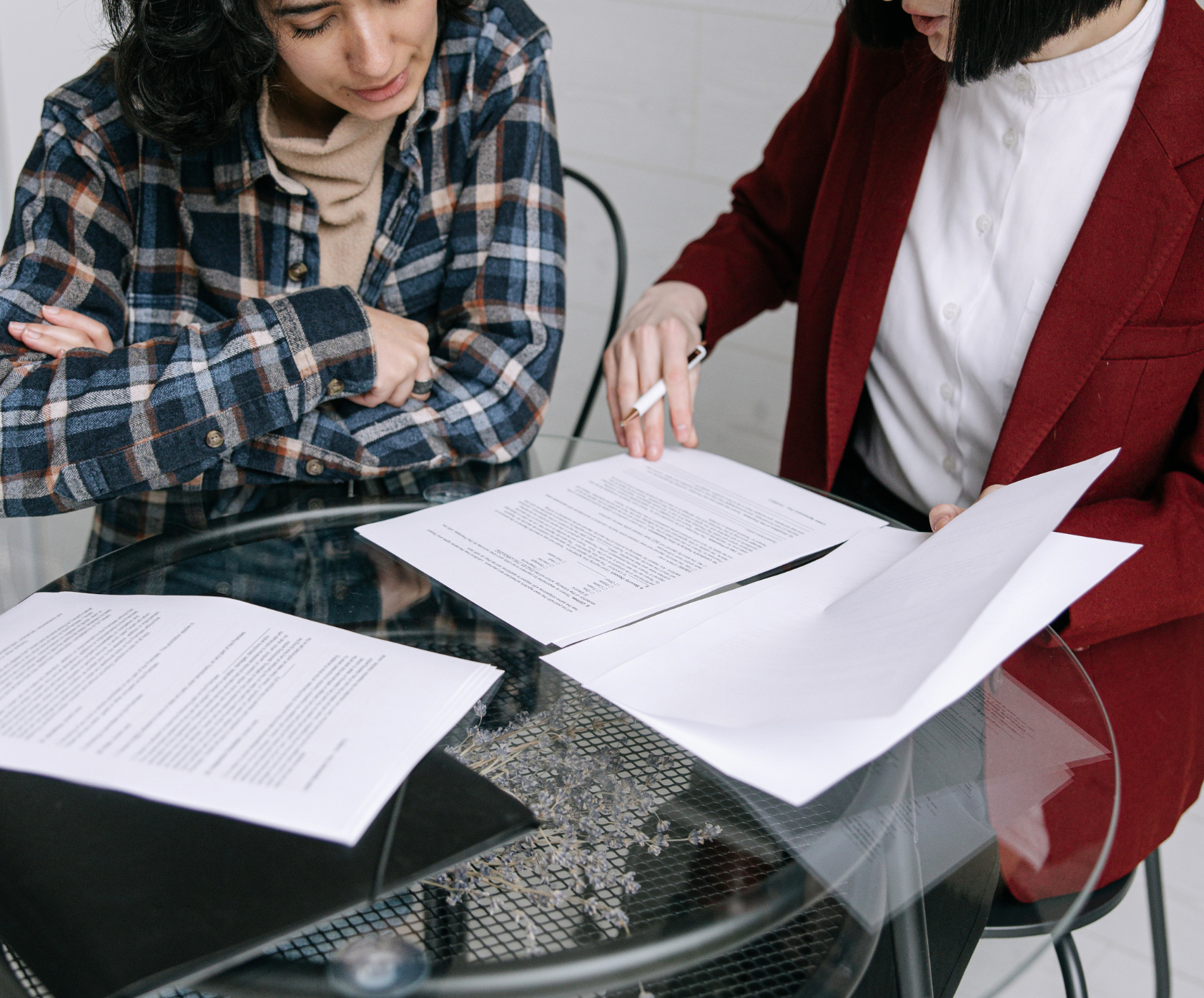
Looking at mocks together calmly helps your child see a way forward, not just a mark on a page.
Rebuilding Confidence Day by Day
Confidence doesn’t magically come back overnight. It’s rebuilt through small wins repeated over time. You can support this by:
- Noticing effort: “I’m proud of you for doing that 30-minute session, especially when you weren’t in the mood.”
- Highlighting progress: “Last month you didn’t understand this topic at all – now you can explain most of it back to me.”
- Using “yet” language: “You haven’t cracked this yet – but we know what to work on now.”
- Keeping comparisons out of it: focus on their journey, not siblings, friends or class averages.
If anxiety feels high most of the time, or starts affecting sleep, appetite or mood, the NHS guide on helping your child beat exam stress is a helpful next read, and talking to school or your GP can be a good step too.
What if They “Failed” a Mock (Especially in Maths)?
Many parents come to Level-Up worried because their child has “failed” a maths mock or dropped several grades in a subject that used to feel okay. It’s scary – maths in particular can feel like a gatekeeper for college courses and apprenticeships.
If this is your situation, try to keep the focus on:
- Understanding exactly which bits of maths are causing trouble (fractions, algebra, problem-solving, etc.).
- Creating short, targeted practice sessions instead of vague “do more maths” pressure.
- Connecting them with explanations that make sense to them – sometimes a different voice or method changes everything.
The key message for your teen is: “This mock shows us where you need more help – it doesn’t decide your final grade.”
Where Level-Up Fits In After Mocks
When confidence has taken a hit, it can be hard for your teen to get going again on their own. This is where the Level-Up GCSE Support Community can make a huge difference. Inside Level-Up, students get:
- Over 32 live tutoring and support sessions a month across core GCSE subjects and wellbeing.
- On-demand lessons – every live class is recorded so they can revisit it anytime.
- Pre-recorded modules and expert video courses so they can learn at their own pace without hunting through old exercise books.
- Support from tutors inside the community, live, when they’re stuck or worried about a topic.
- Mental well-being and teen hangout sessions to reduce overwhelm and build friendships.
- A smart rewards system and leaderboard to keep them engaged and feeling proud of their effort.
Level-Up is designed to give teens structure, flexibility and real human support in one place. Membership is capped at 1,000 students so they don’t get lost in a crowd, and there are no long-term contracts or hidden commitments – you can cancel whenever you like. If you’d like to see how other families have found it, you can read our 5-star reviews here.
If you want a clearer look before joining, you can also come along to a 30-minute Intro Session with Andy (usually every other Saturday at 10am on Google Meet), where he walks you through how to join live classes, find resources quickly and use the rewards system. Just email level-uponlinetutoring@outlook.com to check the next date.
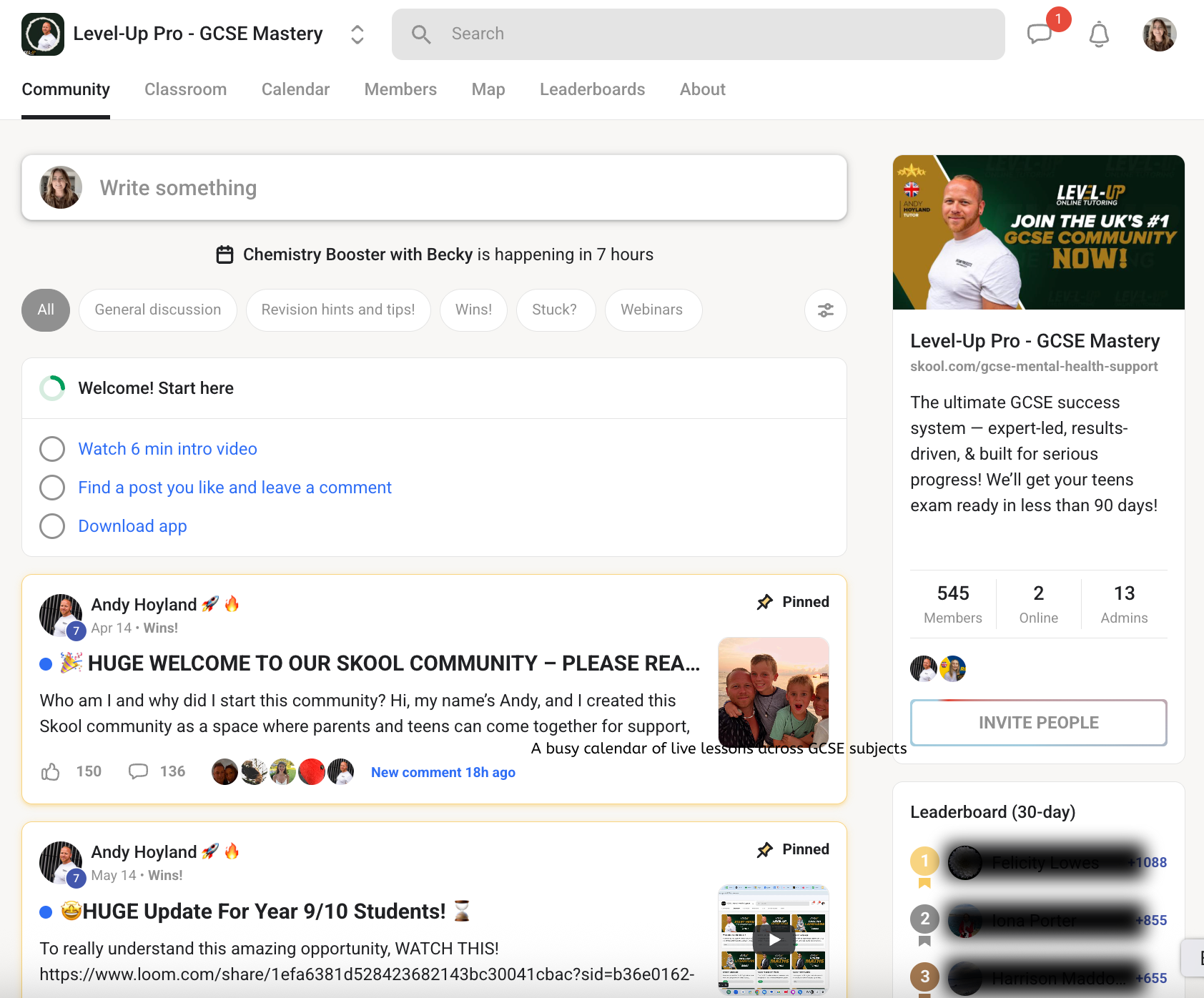
A calm, structured community helps teens rebuild confidence after disappointing mock results.
Why Level-Up Works So Well After Mock Exams
If your teen is feeling knocked back by their mocks, the Level-Up programme is designed to lower stress, not add to it. Students get:
- Step-by-step guidance instead of “revise everything and hope for the best”.
- Live and on-demand lessons they can fit around clubs, family life and energy levels.
- Teacher support when they’re stuck, so worries don’t snowball in silence.
- A friendly community where effort is celebrated, not just grades.
- Tools for planning, revision and mindset – so they feel more in control of their GCSE journey.
✅ Want to help your teen bounce back from disappointing mock results?
Bottom Line
A bad set of GCSE mock results doesn’t mean your child has failed. It means you’ve been given a clear picture of where they need more support. With calm conversations, a realistic plan and the right structures around them, your teen can rebuild their confidence and move towards the real exams feeling stronger, not defeated – even if it currently feels like my child has lost confidence after GCSE mock exams.
Mind reading: How to reduce GCSE stress and anxiety for teens
Also helpful: Best GCSE revision timetable for busy families