


If you’re thinking “my child thinks it’s too late to do well in their GCSEs — what can we do to help?”, you’re not alone. After disappointing mock results, it can feel as though the damage is done and there isn’t enough time to turn things around. Teens say things like “What’s the point now?” or “I’ve already ruined it”, and parents are left wondering how to respond without either pretending everything’s fine or piling on pressure. This post will help you move from “too late” panic to a calm, realistic plan for the time that’s left.
What we’ll cover (in plain English)
- Why so many teens feel it’s “too late” after mock exams.
- What to say (and what to avoid) when your child has given up hope.
- How to turn mock results into a simple, focused plan.
- How to help your teen catch up without burning out.
- How Level-Up can give them structure, expert help and motivation.
By the end, you’ll have a gentler way to answer the thought “my child thinks it’s too late to do well in their GCSEs — what can we do to help?” and a clear idea of how Level-Up Online Tutoring can support your teen to feel less behind and more in control.

It often feels “too late” after mocks – but for most teens, there is still time to make meaningful progress.
“My child thinks it’s too late to do well in their GCSEs” – is this normal?
Yes. Mocks are often the first time teens see a full set of grades written down against their name. If those grades are lower than expected, it can feel like a verdict, not feedback. Add in talk of targets, group-chat comparisons and the calendar creeping towards exam season, and “I’ve left it too late” can feel completely logical to them.
Your job isn’t to argue them out of their feelings. It’s to help them see that mocks are information about where they were on one set of days, not a final judgement on what they can achieve by the summer.
What your teen really means when they say “it’s too late”
“It’s too late” often hides other feelings underneath:
- Fear: “If I try and still don’t do well, that will hurt even more.”
- Shame: “Everyone else seems to be coping better than me.”
- Overwhelm: “There’s so much to catch up on, I don’t know where to start.”
- Exhaustion: “I’m already tired and the idea of doing more feels impossible.”
Understanding this changes how you respond. Instead of “Don’t be silly, there’s loads of time”, you might say, “It sounds like you feel miles behind and that’s really scary. Let’s take a proper look at where things are and what’s realistic from here.”
What to say when they’ve “given up”
Here’s a simple structure you can lean on:
- Start with curiosity.
“When you say it’s too late, what makes you feel that way?” - Reflect back what you hear.
“So in your mocks you got a 3 in maths and a 4 in science, and it feels like there’s no way to move up from that.” - Normalise their reaction.
“Lots of teens feel this way after mocks. It doesn’t mean you’re not capable – it means we need a clearer plan.” - Shift the focus to ‘from here’.
“We can’t change the mocks, but we can decide what we do with them now.”
The aim isn’t to promise perfect grades. It’s to move them from “What’s the point?” to “Maybe there is something I can do next.”

With a clear, focused plan, catching up for GCSEs feels less overwhelming and more doable.
Turn mocks into a starting point, not a sentence
Instead of treating mock grades as a fixed prediction, treat them as a map. Together, you can:
- Pick 1–3 key subjects that matter most for next steps (college, sixth form, apprenticeships) or where confidence is lowest.
- Ask school for specifics: Was the issue timing, content, or exam technique?
- Turn that into clear priorities: for example, “algebra and fractions in maths”, “essay structure in English”, or “cell biology in science”.
Now you’re no longer dealing with “all of GCSEs” as one giant blob – just a small list of concrete targets.
Make catching up feel manageable (not like punishment)
When a teen feels behind, “work harder” usually sounds like “suffer more”. A few tweaks can make a big difference:
- Short blocks: 25–30 minutes on one subject, one specific task.
- Weekly focus topics: one key topic per subject each week instead of jumping around.
- Regular check-ins: a quick weekend chat – “What went better? What still feels confusing?”
- Boundaries around wellbeing: sleep stays non-negotiable, and there are breaks and small rewards after revision blocks.
Using a simple GCSE revision timetable that works for busy families can make this feel more concrete. The NHS also has a helpful overview on helping your child beat exam stress if you’re worried their stress is overwhelming them.
How Level-Up helps when it feels “too late”
Many parents quietly think, “My child thinks it’s too late to do well in their GCSEs — what can we do to help when I’m not a teacher and time already feels tight?” That’s exactly where the Level-Up GCSE Support Community comes in – this is the part where you don’t have to carry it all on your own.
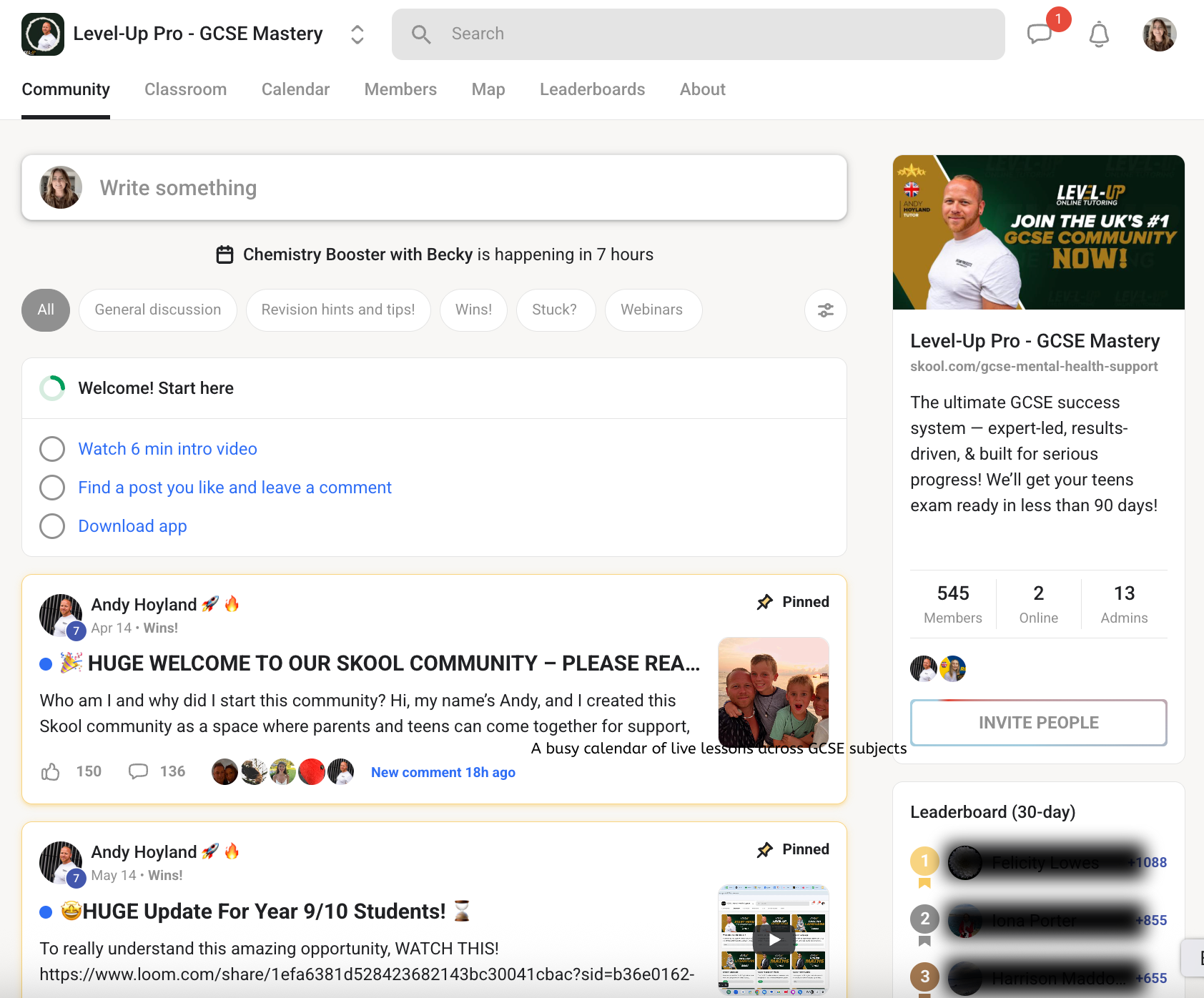
A calm, structured community and a trusted tutor helps teens see that it isn’t too late to move forward.
Inside Level-Up, students get:
- Over 32 live tutoring and support sessions a month across core GCSE subjects and wellbeing.
- On-demand lessons – every live class is recorded so they can revisit it anytime.
- Pre-recorded modules and expert video courses so they can learn at their own pace without hunting through old exercise books.
- Support from tutors inside the community, live, when they’re stuck or worried about a topic.
- Mental wellbeing & teen hangout sessions to reduce overwhelm and build friendships.
- A smart rewards system and leaderboard to keep them engaged and feeling proud of their effort.
Level-Up is designed so teens don’t feel they’re doing this alone. Membership is capped at 1,000 students so they don’t get lost in a crowd, and there are no long-term contracts or hidden commitments – you can cancel whenever you like. If you’d like to see how other families have found it, you can read our 5-star reviews here.
If you want a clearer look before joining, you can also come along to a 30-minute Intro Session with Andy (usually every other Saturday at 10am on Google Meet), where he walks you through how to join live classes, find resources quickly and use the rewards system. Just email level-uponlinetutoring@outlook.com to check the next date.
✅ Want your teen to see that it isn’t “too late” to do well in their GCSEs?
Bottom Line
When your child thinks it’s too late to do well in their GCSEs, it doesn’t mean the story is over. It means they’re scared, discouraged and unsure how to move forward. With calm conversations, a focused plan built from their mock results and the right support around them, there is still plenty they can do between now and exam day. You don’t have to have all the answers – you just need to walk the next few steps together.
Mind reading: My child is panicking about GCSEs and doesn’t feel prepared
Also helpful: How to reduce GCSE stress and anxiety for teens