


Easter is gone. Now it’s the final sprint. If you’re searching for how to improve GCSE grades fast in the final weeks, you’re not alone and you’re not doing anything wrong. This is the point in the year where pressure peaks. The countdown feels real, motivation can dip, and teens often swing between panic and avoidance.
This post is a calm, practical plan for what to do right now. Not a perfect long-term strategy. Just the next right steps that help your teen focus on what matters most, improve accuracy, and make real progress without burning out.
You do not need more hours. You need smarter focus and quick feedback.
The goal in the final weeks is not to do everything. It’s to improve the right things.
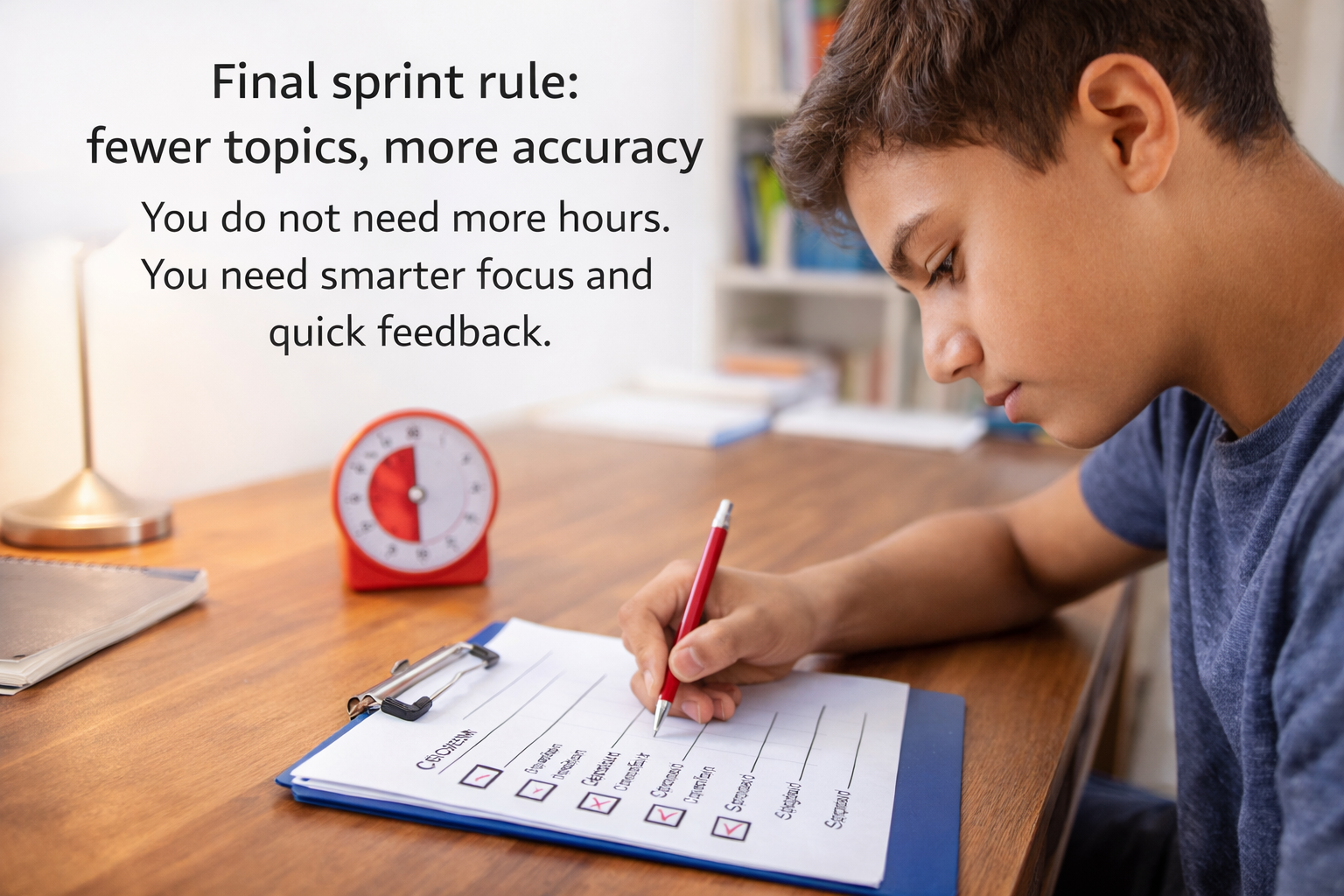
Focused revision with quick feedback helps students improve faster than simply doing longer hours.
First: what actually improves GCSE grades in the final weeks?
At this stage, the biggest improvements usually come from four things:
- Fewer topics: trying to cover everything creates panic and shallow revision.
- Better accuracy: it’s about fixing recurring mistakes, not just doing more work.
- Active revision: recall, questions and corrections work better than reading or highlighting.
- Quick feedback: students improve faster when they know what they got wrong and how to fix it.
That’s why the final weeks should feel more focused and more deliberate. Not heavier.
The calm action plan for the final weeks (4 steps)
Step 1: Choose the two subjects that will move grades fastest
Not every subject can be the priority at the same time. In the final weeks, the best strategy is to focus on:
- One weak subject where gaps are clearly costing marks.
- One nearly there subject where a small push could realistically lift a grade.
This creates faster wins, and faster wins build confidence.
Step 2: Build a short high-impact topic list
To improve GCSE grades fast, keep the list short. Aim for 6 to 10 topics per subject max.
Specific beats vague. Not “Science”. More like “Electricity”, “Rates of reaction”, or “Required practicals”.
If you have mock feedback, start there. If not, start with the topics your teen avoids or keeps getting wrong.
Step 3: Use active revision only
Passive revision does not improve results quickly. In the final weeks, the most effective revision is active:
- Exam style questions
- Self-testing key facts, formulas and quotes
- Explaining topics out loud in simple language
- Watching a short teaching clip, then writing what they remember from scratch
If you want a quick check on whether revision is real or just busy, this helps: Is my child really revising for GCSEs or just looking busy?
Step 4: Add quick feedback loops
Marks improve fastest when students know exactly what they got wrong and how to fix it. Without feedback, they often repeat the same mistakes.
- After each revision block, identify one mistake and correct it.
- Keep a tiny mistake list of recurring gaps.
- Revisit that list twice a week so errors stop repeating.
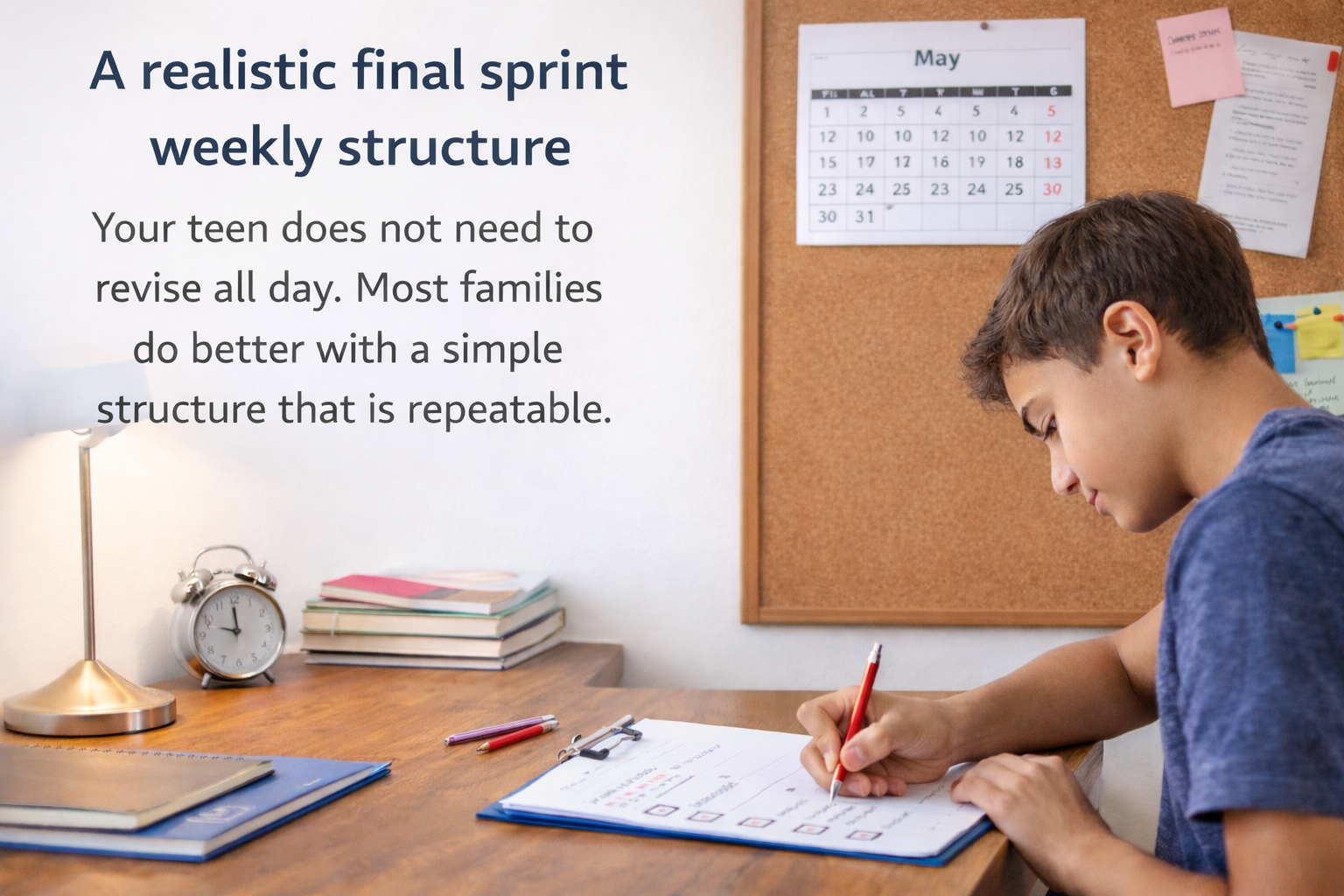
A clear GCSE revision timetable helps reduce stress and makes focused revision easier to repeat.
GCSE revision timetable for the final weeks
If you are wondering how to structure revision now, the answer is simple: build a GCSE revision timetable Year 11 students can actually stick to.
Your teen does not need to revise all day. Most students do better with a simple, repeatable weekly structure that feels manageable.
- 3 to 5 revision days each week
- 2 to 4 short study blocks per day
- Two subjects at a time, not everything at once
- One weekly review session to revisit mistakes and lock in progress
If you want a fuller structure to copy, this pairs well: GCSE revision plan for the last few months.
Busy parents: you don’t have to hold all of this together alone
When GCSEs are close, parents often end up doing everything. Planning, pushing, calming, motivating, organising, while also juggling work and family life. That’s a lot to carry.
This is where Level Up helps most: it gives your teen structure, teaching and quick support inside the programme, and gives you space to step back from managing every part of revision yourself.
Want to see how Level Up works before you decide?
Andy runs a friendly 20 to 30 minute Welcome Session every Tuesday at 7pm (UK time).
Reserve your place for the next Tuesday session
You don’t need to be a member to join. It’s a chance to explore the platform before you decide.

Click the image to explore Level Up on Skool. Support that helps students stay focused, accurate and consistent in the final weeks.
Inside Level Up, your teen gets:
- Live teaching throughout the month across key GCSE subjects.
- Access to expert teachers for quick help when they’re stuck.
- On-demand lessons and modules they can rewatch anytime.
- Mental health and teen hangout sessions to reduce stress and build confidence.
- A community of students that boosts motivation and consistency.
If you’d like reassurance from other families, you can read our 5-star reviews here.
Want your teen supported through the final sprint?
Bottom line
To improve GCSE grades fast in the final weeks, focus beats hours. Choose the right subjects, keep the topic list short, use active revision, and build quick feedback into the process. That is how marks improve quickly, without piling on more stress.
Mind reading: Easter Revision Plan for Year 11 GCSEs: How to Boost Grades Fast!
Also helpful: My Year 11 Is Overwhelmed and Panicking About GCSEs: How Can We Help This Week?