


If your child is in Year 10, GCSEs can still feel far enough away to ignore. But this is actually one of the best times to reduce GCSE stress before Year 11 begins.
Many parents wait until their teen is already overwhelmed, avoiding revision or panicking about exams. But the students who cope best in Year 11 are often the ones who build calm, consistent habits earlier.
Year 10 is not the time to panic.
It is the perfect time to build the habits that make Year 11 feel calmer, clearer and more manageable.
Want your teen to feel ready before Year 11 starts?
Level-Up helps Year 10 students build confidence, routine and study habits before GCSE pressure really begins.
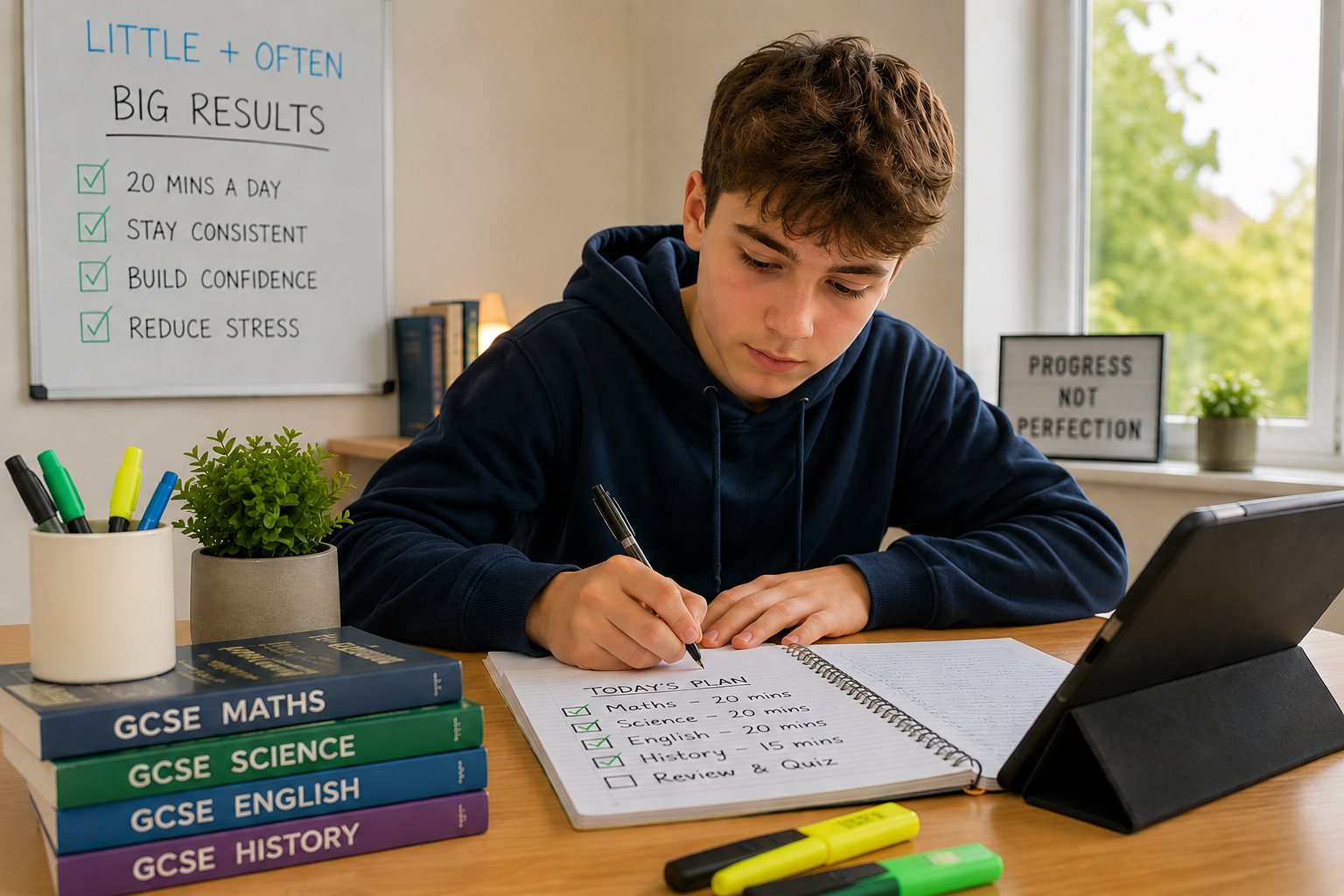
Building small, consistent study habits in Year 10 can help students feel more confident and less stressed when Year 11 begins.
Why Year 10 matters for GCSE stress
Year 10 is where GCSE pressure often starts quietly. Students may not be in full exam mode yet, but they are already building patterns that carry into Year 11.
Some teens begin to:
- Avoid subjects they find difficult
- Leave homework and revision until the last minute
- Rely on passive revision like reading or highlighting
- Lose confidence after mocks or assessments
- Feel unsure how to revise without someone pushing them
The good news is that Year 10 gives you time to change those patterns before they become Year 11 panic.
Helpful reframe: Reducing GCSE stress is not about starting intense revision early. It is about making learning feel normal, manageable and consistent.
What parents can do in Year 10 to reduce GCSE stress later
You do not need to turn your home into a revision bootcamp. The most useful thing you can do is help your teen build simple habits that reduce pressure later.
Instead of:
- Waiting until Year 11 panic starts
- Only reacting when grades drop
- Nagging about revision every night
- Expecting them to know how to revise alone
Try this:
- Build small study habits now
- Create a simple weekly routine
- Use support before they feel behind
- Help revision feel normal, not scary
Four simple habits that make Year 11 easier
The aim is not to make your teen revise for hours. It is to help them practise the behaviours that make GCSEs feel less overwhelming later.
1. Little and often
Short sessions done consistently are usually better than long sessions done in panic. Even 20 minutes can help build momentum.
2. Active revision
Encourage self-testing, questions, explaining topics aloud and correcting mistakes instead of just reading notes.
3. Quick help
When students get stuck, they need a way to move forward quickly. Otherwise, small gaps can turn into avoidance.
4. Confidence checks
Ask which subjects feel manageable and which feel worrying. Confidence tells you where support may be needed early.
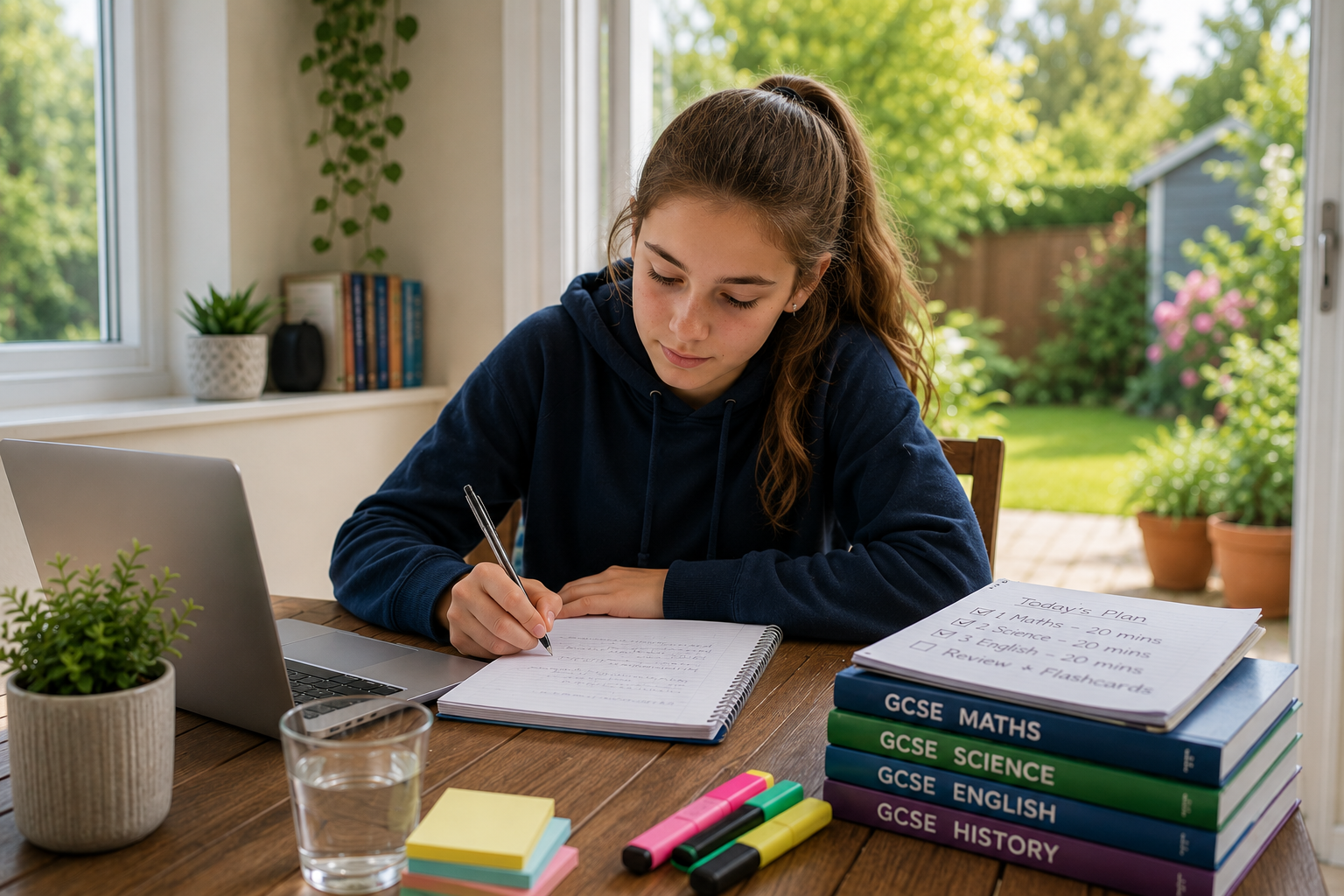
Keeping up small amounts of learning over summer can help students feel more confident, prepared and less stressed when Year 11 begins.
Why summer is a key moment for Year 10 students
The summer between Year 10 and Year 11 is a turning point. Some students switch off completely and return in September feeling rusty, anxious and behind. Others keep learning little and often, so Year 11 begins with more confidence.
This does not mean filling the summer with hours of revision. It means keeping the brain engaged enough that your teen does not feel like they are starting from scratch in September.
A simple summer routine could look like:
- 20 minutes of learning a day
- One short video tutorial
- One topic review
- One live session a week
- A quick check-in on what feels easier afterwards
That kind of routine feels manageable, but over a six-week summer it can make a huge difference to confidence, memory and momentum.
How Level-Up helps Year 10 students build strong GCSE habits
One of the hardest parts for parents is trying to become the revision manager at home. You are trying to motivate, organise and reassure your teen, while they may resist every conversation about schoolwork.
This is where Level-Up helps: it gives students a clear place to go for live lessons, short video tutorials, support and motivation, so parents do not have to carry the whole process alone.
Want to see how Level-Up works before you decide?
Andy runs a friendly 20 to 30 minute Welcome Session every Tuesday at 7pm (UK time).
Reserve your place for the next Tuesday session
You do not need to be a member to join. It’s a chance to explore the platform before you decide.

Click the image to explore Level-Up on Skool and help your teen build strong GCSE habits before Year 11.
Inside Level-Up, students get:
- Live GCSE tutoring across key subjects to keep them supported and on track.
- Short video tutorials they can use little and often over summer.
- Support when they get stuck, so small gaps do not turn into bigger worries.
- Mental wellbeing and teen hangout sessions to reduce stress and build confidence.
- A supportive student community that helps motivation feel less lonely.
If you’d like reassurance from other families, you can read our 5-star reviews here.
Want your teen to start Year 11 feeling calmer and more prepared?
Bottom line
What parents can do in Year 10 to reduce GCSE stress later is simpler than most people think. Help your teen build small, consistent habits now, keep learning manageable, and make sure support is in place before Year 11 pressure builds.
Year 10 is not about panic. It is about preparation, confidence and giving your child a stronger start before GCSEs feel urgent.
Mind reading: How to Support a Teen Who Avoids Revision
Also helpful: GCSE English Language vs Literature: What Parents Need to Know