

Many parents assume successful GCSE students revise for hours every night. But in reality, the students who cope best are often not the ones who do the longest sessions. They are the ones who study little and often for GCSEs, building confidence and routine before panic sets in.
This is especially important for Year 10 students moving towards Year 11. A small amount of consistent learning now can make the GCSE year feel calmer, more manageable and much less overwhelming.
Successful GCSE revision is not about doing everything at once.
It is about showing up regularly, building confidence and keeping learning fresh.
Want your teen to build better GCSE habits?
Level-Up helps students keep learning little and often through live GCSE sessions, video tutorials and support when they get stuck.
Why successful GCSE students study little and often
GCSEs are not usually won or lost in one huge revision session. They are built through repeated exposure, small wins and regular practice.
When students study little and often, they are more likely to:
- Remember information for longer
- Feel less overwhelmed by large topics
- Spot gaps before they become serious
- Build confidence through small successes
- Start Year 11 with stronger habits already in place
Helpful reframe: The goal is not to make your child revise constantly. The goal is to make learning feel normal enough that they keep coming back to it.
The problem with last-minute cramming
Cramming can feel productive because students spend a lot of time with their books open. But long, stressful sessions often happen when a student already feels behind.
That means they are usually trying to learn too much, too quickly, under pressure.
What “little and often” actually looks like
Studying little and often does not mean your teen needs to revise every spare minute. In fact, it works best when it feels simple enough to repeat.
A realistic routine could look like:
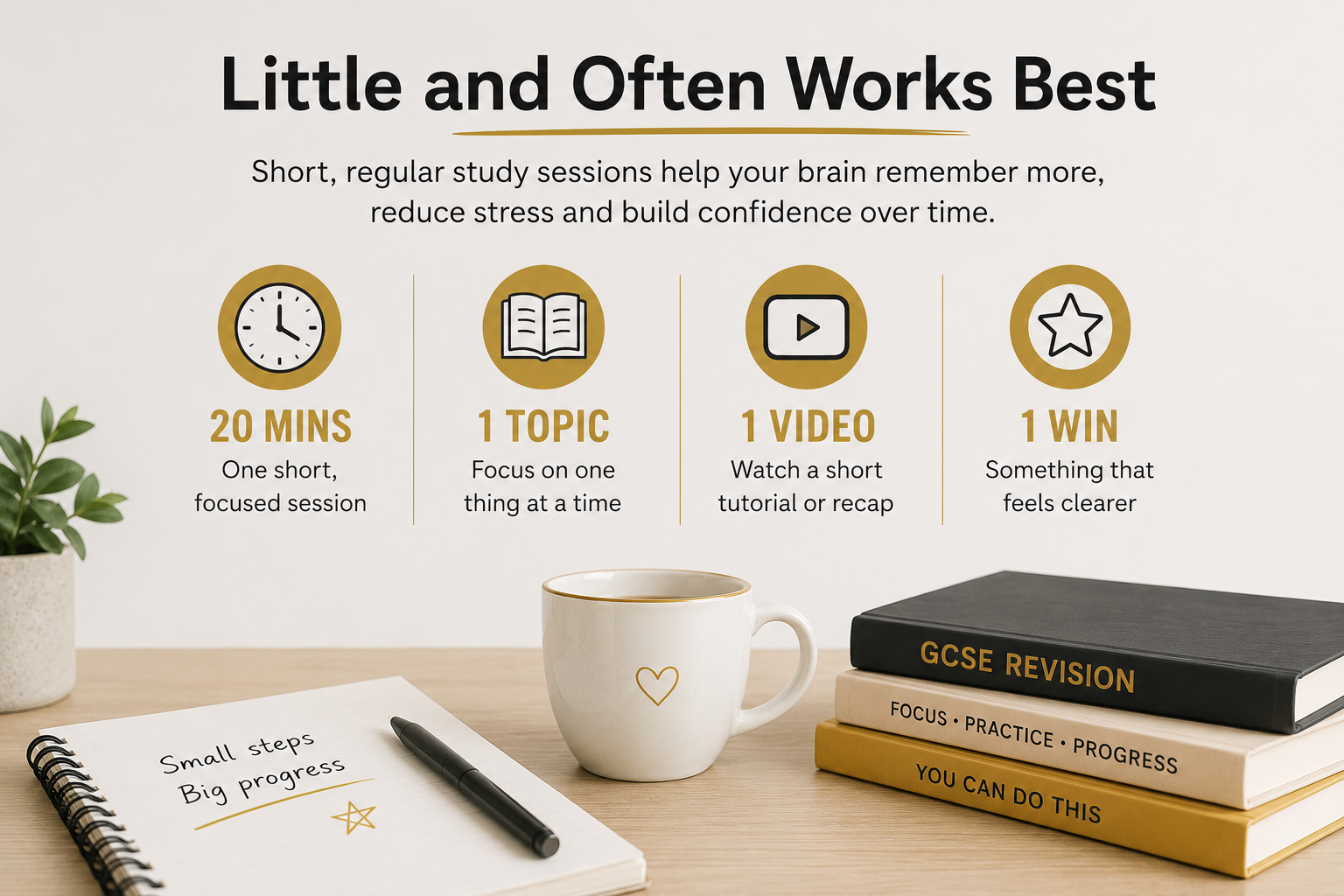
A simple GCSE study routine: 20 minutes, one topic, one short video and one small win.
That kind of routine is much easier to start and much easier to repeat than a long revision timetable that feels impossible after two days.
Why little and often works so well over summer
Summer is one of the best times to build this habit because students are not dealing with the full pressure of school every day.
They have more space to revisit difficult topics, close gaps and keep learning fresh without feeling like they are constantly chasing homework deadlines.
Little and often over summer does not ruin the holiday.
It helps students return in September feeling less rusty, less anxious and more prepared for Year 11.
This links closely to summer learning loss. If your teen stops completely, they may return to school feeling like they are starting again. But if they keep learning gently, they are more likely to hold onto confidence and momentum.
The real secret is routine, not motivation
Many parents wait for their child to feel motivated. But motivation is unreliable, especially when a student feels tired, overwhelmed or unsure where to start.
A routine is more dependable than motivation because it removes the daily decision-making.
Motivation says
- I’ll revise when I feel ready
- I’ll start when I have more time
- I’ll catch up later
- I need to do loads at once
Routine says
- I only need to begin
- I know what to do next
- Small steps still count
- I can keep going
That is why short, repeated learning can be so powerful. It helps students stop relying on big bursts of motivation and start trusting the process.
How Level-Up helps students study little and often
One of the hardest parts for parents is trying to create and maintain a revision routine at home. You may feel like you are constantly reminding, checking and encouraging, which can quickly turn into arguments.
Level-Up gives students somewhere to go for regular support, so learning does not depend entirely on parent pressure.
Inside Level-Up, students can get:
- Live GCSE sessions across key subjects.
- Short video tutorials they can use little and often.
- Support when they get stuck, so gaps do not grow.
- Confidence and mindset support to reduce stress.
- A supportive student community to help motivation and momentum.

Click the image to explore Level-Up and see how regular GCSE support can help your child build confidence and keep learning.
Want your child to build better GCSE habits?
Join Level-Up so your child can keep learning little and often with live sessions, video tutorials and support when they need it.
Bottom line
Successful GCSE students often study little and often because consistency builds confidence. They do not wait until everything feels urgent. They keep learning in small, manageable ways so topics stay fresh and revision feels less overwhelming.
Your child does not need to study for hours every day. But a simple routine, regular support and small wins can make a huge difference to how prepared they feel for GCSEs.
Mind reading: Why Most GCSE Tutoring Stops Over Summer And Why We Don’t
Also helpful: How Much GCSE Learning Is Lost Over Summer?