

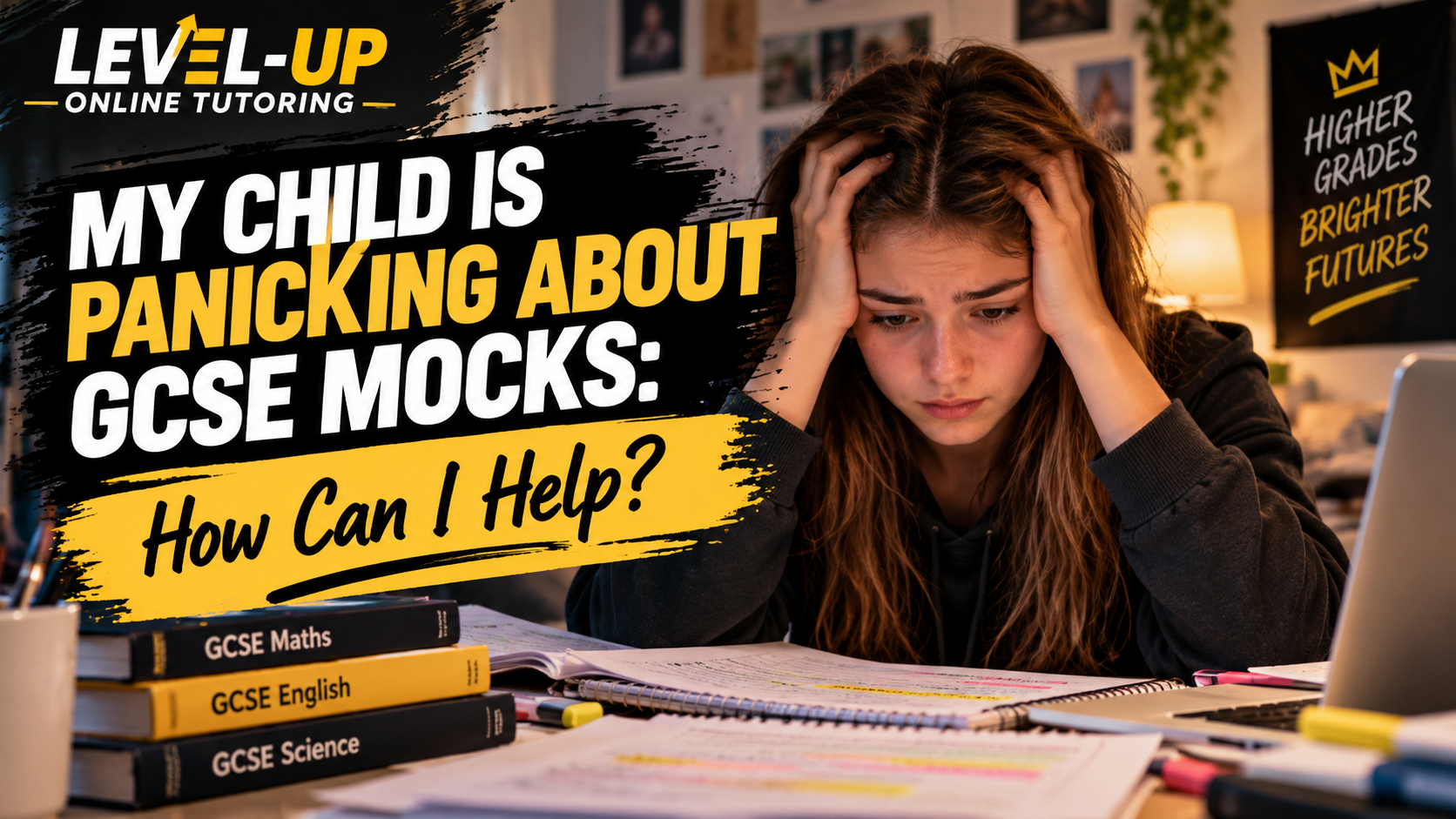
It's Sunday evening. Your teenager has GCSE mocks coming up, but instead of revising, they're sitting in their bedroom looking completely overwhelmed.
They might be crying. They might be angry. They might be telling you there's no point because they're going to fail anyway.
Or perhaps they're doing absolutely everything except revision.
"I know they need to revise, but every time I mention it, things get worse."
If this sounds familiar, you're certainly not the only parent wondering how to help.
GCSE mock exam anxiety can be difficult for teenagers and their families. You want your child to do well, but you don't want every conversation about school to turn into an argument.
At Level-Up Online Tutoring, we believe academic progress and emotional wellbeing need to be considered together. A student who feels overwhelmed may need reassurance, structure and the right teaching support for Year 11 mocks before they can make meaningful progress.
In this final article in our Year 11 Mock Series, we'll explore why teenagers panic about their mocks, what parents can do to help and how to support revision without making the pressure worse.
Is GCSE Stress Taking Over at Home?
Discover how Level-Up combines subject teaching with wellbeing support, helping students feel more supported as they prepare for their exams.
Helping your teenager feel better matters too.
Explore GCSE Wellbeing SupportMy Child Is Panicking About GCSE Mocks. What Should I Do?
Start by helping them feel heard and supported, rather than immediately trying to solve the revision problem.
When they're calmer, work together to identify what's worrying them and one manageable next step.
Reassurance, realistic expectations and access to help with difficult subjects can all make revision feel less daunting.
01. Reduce the immediate pressure.
02. Understand what's causing the anxiety.
03. Make the next step achievable.
Why do GCSE mocks cause so much anxiety?
For many Year 11 students, mock exams are the first time the pressure of their GCSEs feels truly real.
There are revision timetables, conversations about predicted grades, sixth-form applications and reminders that their final exams are getting closer.
At the same time, they're still teenagers, managing friendships, changing emotions, schoolwork and everyday life.
Some will respond by becoming extremely organised. Others will find the whole experience difficult to manage. That's why having access to GCSE stress and wellbeing support alongside academic teaching can be valuable.
And it's not always the students who are struggling academically who experience the most anxiety.
Fear of disappointing people
Some teenagers worry about letting down parents, teachers or themselves, particularly if they feel they're expected to achieve certain grades.
Not knowing enough
A student may feel frightened because they know there are subjects or topics they don't fully understand and aren't sure how to improve.
Too much to think about
When every subject seems urgent, it can become difficult to decide where to start, even when a teenager genuinely wants to do well.
These feelings can overlap. A teenager who doesn't understand a subject may become anxious about failing, then avoid revising because opening the textbook reminds them of what they don't know.
That's why it helps to look beyond whether your child appears motivated and try to understand what's making revision difficult. Sometimes, having access to live GCSE lessons with teachers who can explain difficult topics can make the next step feel more achievable.
It Might Look Like Laziness. It Could Be Overwhelm.
Avoiding revision doesn't always mean a teenager doesn't care about their exams.
"They just won't get started."
"I don't know how to do this."
Before asking "Why aren't you revising?"
Try asking "What's making revision difficult?"
Of course, not every teenager who puts off revision is experiencing anxiety. Sometimes they would simply rather be doing something else.
But when avoidance comes with distress, panic, low confidence or repeated arguments, it's worth exploring what may be happening beneath the surface.
How can I tell if my teenager is struggling with exam anxiety?
Some nervousness before exams is common. A little pressure can encourage students to prepare, but excessive anxiety can interfere with concentration, sleep and everyday life.
Teenagers don't always explain how they're feeling directly, so changes in their behaviour may be worth noticing.
Exam stress can look different for everyone
"Your teenager doesn't have to be visibly panicking to be finding things difficult."
If anxiety is persistent, worsening or interfering with everyday activities, speak with your child's school and GP rather than trying to manage everything through revision changes alone.
What should I say when my child is panicking about GCSE mocks?
When your teenager is upset, your instinct may be to reassure them by explaining why they don't need to worry.
You might say, "You'll be fine" or "You just need to get on with it."
Those comments are usually well intentioned, but they may not help a teenager who genuinely feels overwhelmed.
Sometimes the most useful thing you can do is acknowledge how they're feeling before moving towards solutions.
Comments that may increase pressure
Words that open a conversation
You're not telling your child their exams don't matter. You're showing them that they don't have to manage their worries alone.
And once they feel more able to talk, you may discover that the problem is something quite specific, such as a Maths topic they don't understand or a fear of forgetting everything in the exam room. Knowing they can access recorded lessons and ongoing teacher support through Level-Up may help them feel less alone with the academic side of their worries.
Six practical ways to help your teenager feel calmer about GCSE mocks
There isn't one approach that works for every student. But these steps can help make a difficult situation feel more manageable.
Small Changes That Can Make a Difference
01
Listen before planning
Give your teenager space to explain what they're worried about before suggesting timetables, tutors or extra work.
02
Make the first step small
Instead of asking them to revise an entire subject, agree on one manageable task, such as reviewing a single topic.
03
Focus on understanding
If they don't understand something, find appropriate teaching support rather than expecting them to keep struggling alone.
04
Protect their downtime
Encourage regular breaks, sufficient sleep, movement and time away from schoolwork. Rest is part of a sustainable routine.
05
Reduce comparisons
Avoid comparing their revision hours or predicted grades with friends or siblings. Focus on their individual needs and progress.
06
Keep checking in
Have short, supportive conversations about how things are going, rather than making every interaction about revision.
What if my child is so overwhelmed they can't start revising?
When a teenager feels they have an enormous amount to learn, even choosing what to do first can become stressful.
A revision timetable may look sensible on paper, but it isn't particularly helpful if the student feels unable to follow it.
Instead of beginning with everything that needs to be done before the exams, focus on what feels achievable today.
One Topic. One Task. One Step Forward.
Perhaps your teenager could watch a recorded explanation of a difficult topic.
Perhaps they could join a live lesson where a teacher explains something they haven't understood.
Or perhaps the first step is simply identifying which areas are causing the most worry.
The aim is to make starting feel possible, not to solve every revision problem in one evening.
As confidence grows, students can gradually build a more consistent routine that fits around school, rest and their other commitments.
It's also worth remembering that if your child is repeatedly struggling to understand a subject, the solution may not be to spend longer staring at their notes.
They may need somebody to explain the material differently.
Does Your Teenager Need Help With the Subjects Themselves?
If gaps in understanding are contributing to their anxiety, explore how our Year 11 Mock Exam Support helps students prepare through teaching, guidance and wellbeing support.
Why academic support and emotional wellbeing need to work together
Imagine a teenager who is anxious about their upcoming Maths mock because they don't understand algebra.
You can reassure them, encourage them to take breaks and help them create a manageable routine.
All of that may be useful.
But if they still don't understand algebra, the underlying worry may remain.
Equally, providing additional lessons without recognising that a student is exhausted or overwhelmed may not address everything they're struggling with.
That's why a balanced approach matters.
Better Support Means Looking at The Whole Student.
Learning and wellbeing are connected, and students can benefit from support with both.
Helping students understand
Clear explanations of difficult topics.
Opportunities to ask teachers questions.
Recorded lessons to revisit when needed.
A more supported approach to GCSE preparation.
Helping students feel supported
Recognising stress and anxiety.
Making revision feel more manageable.
Encouraging confidence and connection.
Remembering that grades are only one part of a young person's life.
Students deserve help with what they're learning and how they're feeling.
How Level-Up Online Tutoring supports anxious GCSE students
Level-Up is designed to give students access to teaching and support beyond their school day.
Rather than relying entirely on independent revision, students can join live lessons, revisit recorded teaching and seek guidance from subject teachers.
This can be particularly useful when a teenager feels overwhelmed by a subject because they don't know how to tackle the areas they find difficult.
The programme also includes weekly wellbeing support and opportunities for students to connect with others.
Learning Support That Goes Beyond Revision Notes
60+
Live lessons each month
Opportunities to learn directly from subject teachers.
500+
Hours of recorded teaching
Lessons students can revisit at a time that suits them.
15+
Teachers
Support across subjects when students need more explanation.
Plus weekly wellbeing sessions, a student community and a teen hangout where students can connect beyond their academic lessons.
What if Your Teenager Didn't Have to Work Everything Out Alone?
Live teaching, recorded lessons and wellbeing support give students more ways to access help as they prepare for their GCSEs.
Explore whether Level-Up could be a good fit for your family.
A little more support can make the next step feel less daunting.
Start Your 7-Day Free TrialWhy wellbeing support matters during GCSE mock season
When a teenager is feeling anxious, their difficulties may go beyond revision planning.
They might be struggling with confidence, comparing themselves with classmates or worrying that one disappointing result will affect their future.
These are feelings that deserve to be taken seriously.
Level-Up's weekly wellbeing support recognises that students benefit from opportunities to think about their emotional health alongside their academic progress.
The programme's community and teen hangout also offer ways for students to feel connected rather than experiencing GCSE preparation entirely on their own.
Of course, wellbeing sessions and tutoring are not substitutes for professional mental health care. If a student is experiencing significant or persistent anxiety, they may need additional help from their school, GP or an appropriate mental health service.

Confidence Matters Just as Much as the Revision Plan
Teenagers can find it reassuring to know there are teachers they can turn to and other students experiencing similar challenges.
For some, simply having access to a clear explanation of a difficult topic can help remove one source of worry.
For others, feeling part of a supportive community may help them approach the coming months with more confidence.
What if I'm anxious about my child's GCSE results too?
Parents can feel enormous pressure during Year 11.
You may be thinking about sixth-form entry requirements, future opportunities or whether your teenager is doing enough.
Those concerns are understandable, particularly if you've watched your child struggle with schoolwork or confidence.
But teenagers can sometimes pick up on the anxiety around them, even when nobody is directly putting pressure on them.
It may help to separate your own worries about the future from the conversations you're having with your child today.
Instead of focusing every discussion on the grades they need, try to focus on what support is available, what they understand and what one helpful next step might be.
"You can take their education seriously without making every conversation about exams."
Keep some normality at home
Make time for ordinary conversations that have nothing to do with school.
Encourage meals, rest, hobbies and family time where possible.
Your teenager is still the same person they were before mock season began. Their grades are important, but they aren't the whole picture.
When should I seek additional help for my teenager's exam anxiety?
Exam nerves are common, but ongoing anxiety that affects a young person's wellbeing deserves attention.
If your teenager is regularly unable to sleep, avoiding school, experiencing frequent panic, withdrawing from everyday activities or becoming increasingly distressed, don't assume it's simply a normal part of GCSE preparation.
Contact their school to discuss what support is available and speak to their GP if you're concerned about their mental health.
If a young person is at immediate risk of harm, seek urgent help through emergency services. For urgent mental health support in England, NHS 111 can help direct you to the appropriate service.
The goal isn't to eliminate every feeling of nervousness before an exam. It's to make sure anxiety isn't preventing your teenager from feeling safe, supported and able to manage everyday life.
Hear From Andy: A Different Approach to GCSE Support
Andy Hoyland, founder of Level-Up Online Tutoring, explains the programme and the support available to students.
If you're wondering whether Level-Up could help your teenager, this is a useful introduction to the approach behind the programme.
Not Sure Whether Level-Up Is Right for Your Teenager?
Level-Up offers a Tuesday Welcome Session where families can learn about the programme, explore the support available and understand how to get started.
Find out how the programme works before deciding.
Explore the Tuesday Welcome SessionGCSE Mock Exam Anxiety: Frequently Asked Questions
Is it normal for teenagers to panic about GCSE mocks?
Feeling nervous before GCSE mocks is common, especially when students are worried about grades or the amount they need to learn. However, severe or persistent anxiety shouldn't be dismissed as normal exam stress. Speak with your child's school or GP if you're concerned.
How can I calm my child down before a GCSE mock exam?
Listen to their concerns, acknowledge how they're feeling and avoid adding last-minute pressure. Encourage rest, a manageable routine and simple calming strategies that they find helpful. If they are experiencing repeated panic or significant distress, seek additional support.
Why does my teenager refuse to revise when they're worried about exams?
Sometimes anxiety makes it difficult to start tasks, particularly when students feel overwhelmed or don't understand the material. However, revision avoidance can have different causes. A supportive conversation can help identify whether the difficulty is related to anxiety, motivation, understanding or something else.
Should I push my teenager to revise if they're anxious?
Encouragement and structure can be useful, but repeatedly increasing pressure when a student is distressed may make things harder. Try to understand what's causing the difficulty, agree on manageable steps and involve their school if you need additional guidance.
Can online tutoring help with GCSE mock anxiety?
Online tutoring may help reduce anxiety linked to gaps in understanding by providing additional explanations and teaching support. It isn't a treatment for an anxiety disorder, but it can form part of a wider approach that includes wellbeing support and appropriate professional help when needed.
What if my child has a panic attack before an exam?
Stay calm, remain with them if appropriate and help them move somewhere quieter if possible. Encourage gentle, comfortable breathing without forcing it, and follow any support plan they already have. Tell their school so appropriate arrangements can be discussed. Seek medical advice if attacks recur or you're unsure what is happening, and urgent help for severe or concerning symptoms.
Do GCSE mocks determine my child's final GCSE results?
No. Under normal GCSE assessment arrangements in England, mock grades don't directly count towards final GCSE grades. Schools may use mocks to assess progress and inform predicted grades, but a mock result isn't the same as a final exam result.
Supporting Your Teenager Through Mock Season
Throughout this series, we've explored when students should start revising, how to create a manageable revision plan, what mock results mean and how to help when anxiety becomes overwhelming.
The message running through all four articles is simple: teenagers benefit from clear teaching, realistic expectations and support that recognises their wellbeing as well as their grades.
Help Them Move Forward With Support
Explore Level-Up's live lessons, recorded teaching, weekly wellbeing support and student community.
Bottom line: how can I help my child with GCSE mock exam anxiety?
If your teenager is panicking about their GCSE mocks, it's understandable to want to fix the situation quickly.
But the most useful first step may be to understand what's making them feel overwhelmed.
Is it the amount of revision? A subject they don't understand? Fear of disappointing people? Or the pressure of thinking about their future?
Once you understand the difficulty, you can begin to find the right kind of support.
That might mean helping them break revision into manageable steps, speaking with their teachers, finding additional academic support or seeking professional advice about their anxiety.
And throughout it all, remember that your relationship with your teenager matters more than any individual mock result.
They need to know you're on their side, whatever happens in the exam room.
Your teenager doesn't need to feel completely confident about every exam. They need to know that when something feels difficult, they don't have to face it alone.
More From Our Year 11 Mock Series
This article provides general guidance for parents and is not a substitute for individual medical or mental health advice. If exam anxiety is significantly affecting your teenager's daily life, speak to their school or GP. You can also find information about helping children cope with exam stress on the NHS website .