


GCSE Maths Tutor or Online GCSE Maths Help? What Parents Need to Know in Year 11
"I'm just rubbish at Maths."
If you've heard your teenager say those words, you'll know how frustrating and upsetting it can be.
Perhaps they're struggling with algebra, getting confused by fractions or simply losing confidence every time they sit down to do Maths homework.
And now you're wondering: Do I need to find a GCSE maths tutor?
Before you start searching, let's explore why Maths can become such a struggle, what genuinely helps students improve and whether private tuition or online GCSE Maths support might suit your child best.
Your child doesn't necessarily need a private GCSE maths tutor to improve. What they need is clear teaching, opportunities to practise, useful feedback and the confidence to keep trying when something doesn't make sense straight away.
Why Does My Child Struggle With GCSE Maths?
One of the most difficult things about Maths is that topics build on one another.
If your teenager never properly understood fractions, percentages or basic algebra, they may find later topics increasingly challenging.
And it's surprisingly easy for those gaps to go unnoticed.
A student might understand an explanation in class, complete a few questions with help and move on to the next topic.
But when they're asked to solve a similar problem independently several weeks later, they suddenly feel lost.
That's not necessarily because they haven't tried.
Sometimes they simply need the explanation again, at a different pace, followed by opportunities to practise and check their understanding.
Maths Doesn't Have to Feel Like an Impossible Puzzle.
When a teenager starts struggling with GCSE Maths, the answer isn't always to give them more questions to complete.
Sometimes it's about revisiting an earlier topic, finding a clearer explanation and giving them the chance to practise at their own pace.

Three Reasons GCSE Maths Can Feel Overwhelming
Understanding what's causing the difficulty is the first step towards finding the right support.
Gaps in Earlier Learning
A student might be struggling with quadratic equations because they're not yet confident manipulating simpler algebraic expressions.
Revisiting an earlier topic can sometimes unlock understanding of a more advanced one.
Lessons Move Too Quickly
Teachers have a lot of content to cover, and students don't always feel comfortable stopping a lesson to ask for another explanation.
Being able to pause, revisit or hear something explained again can be helpful.
Maths Anxiety and Lost Confidence
Once a teenager starts believing they're bad at Maths, they may approach each question expecting to get it wrong.
Small achievable steps can help rebuild confidence alongside developing stronger mathematical skills.
What Parents See Isn't Always What Students Feel
When Maths becomes difficult, parents and teenagers can experience the same situation very differently.
"They Just Need to Try Harder."
You've watched them spend twenty minutes staring at their Maths homework.
They're frustrated, distracted and eventually reach for their phone.
From the outside, it can look as though they're simply avoiding the work.
"I Don't Even Know Where to Start."
They might be trying, but the question makes absolutely no sense.
They're worried about getting it wrong again, and asking for help feels embarrassing.
Avoiding the work becomes easier than facing another disappointment.
Of course, this won't describe every teenager. But it's worth considering whether what looks like reluctance is actually a lack of understanding or confidence.
And if that's the case, simply telling your child to revise more probably won't solve the problem.
They need somewhere to turn when they're stuck.
Sometimes the most useful thing you can give a teenager struggling with Maths isn't more revision. It's an explanation that finally makes sense.
Private GCSE Maths Tutor or Online GCSE Maths Help?
Both approaches can be useful. But they offer different types of support, and understanding those differences can help you choose.
A Private GCSE Maths Tutor
A one-to-one tutor works directly with your child, usually during a scheduled appointment.
This can be particularly helpful when a student needs intensive individual attention or has a specific difficulty.
- Teaching can be tailored to your child's precise areas of difficulty.
- The tutor can adapt explanations and pacing during the session.
- Regular appointments can provide helpful structure and accountability.
Something to consider: Your teenager may encounter other problems between appointments and need additional resources to work through them.
Flexible Online GCSE Maths Support
Online GCSE Maths support can include regular live teaching, recorded lessons and opportunities to ask questions throughout the week.
This may suit students who benefit from revisiting explanations and having different ways to access help.
- Join relevant Maths lessons alongside other students.
- Watch recordings again when a topic needs more explanation.
- Ask questions through the programme's teacher support.
- Access support across other GCSE subjects too.
Something to consider: Online group teaching isn't the same as an individual private lesson, so your teenager needs to feel comfortable engaging with that format.
The best option isn't necessarily the one with the most lessons or the most individual attention.
It's the one your teenager will use, understand and feel comfortable returning to.
Some families may even choose to combine approaches, using focused one-to-one teaching for a particular difficulty and online lessons for wider GCSE support.
Wondering Whether Online GCSE Maths Support Would Suit Your Child?
Explore Level-Up's live lessons, recordings and teacher support with a 7-day free trial.
Is Your Child Working Towards Foundation or Higher Maths?
Not every GCSE Maths student is working towards exactly the same qualification requirements.
Many GCSE Maths qualifications in England have Foundation and Higher tiers, and your child's school will be able to explain which tier they're preparing for.
The skills, topics and level of challenge need to match their learning needs and the qualification they're taking.
If you're looking for GCSE Maths help, it's worth checking:
Three Useful Things to Clarify
Which exam board and tier is your child studying? This helps identify the appropriate topic requirements.
Which areas are they finding most difficult? Their teacher may be able to identify specific gaps in understanding.
What would useful progress look like right now? It could be mastering a difficult topic, improving independent problem-solving or building confidence.
If you're uncertain about the right tier or learning priorities, speak to your child's Maths teacher before making changes to their study plan.
How Can I Help My Child Improve at GCSE Maths?
You don't need to be brilliant at Maths yourself to make a positive difference.
In fact, sometimes it's better to focus on helping your teenager find the right teaching rather than trying to explain the topic yourself.
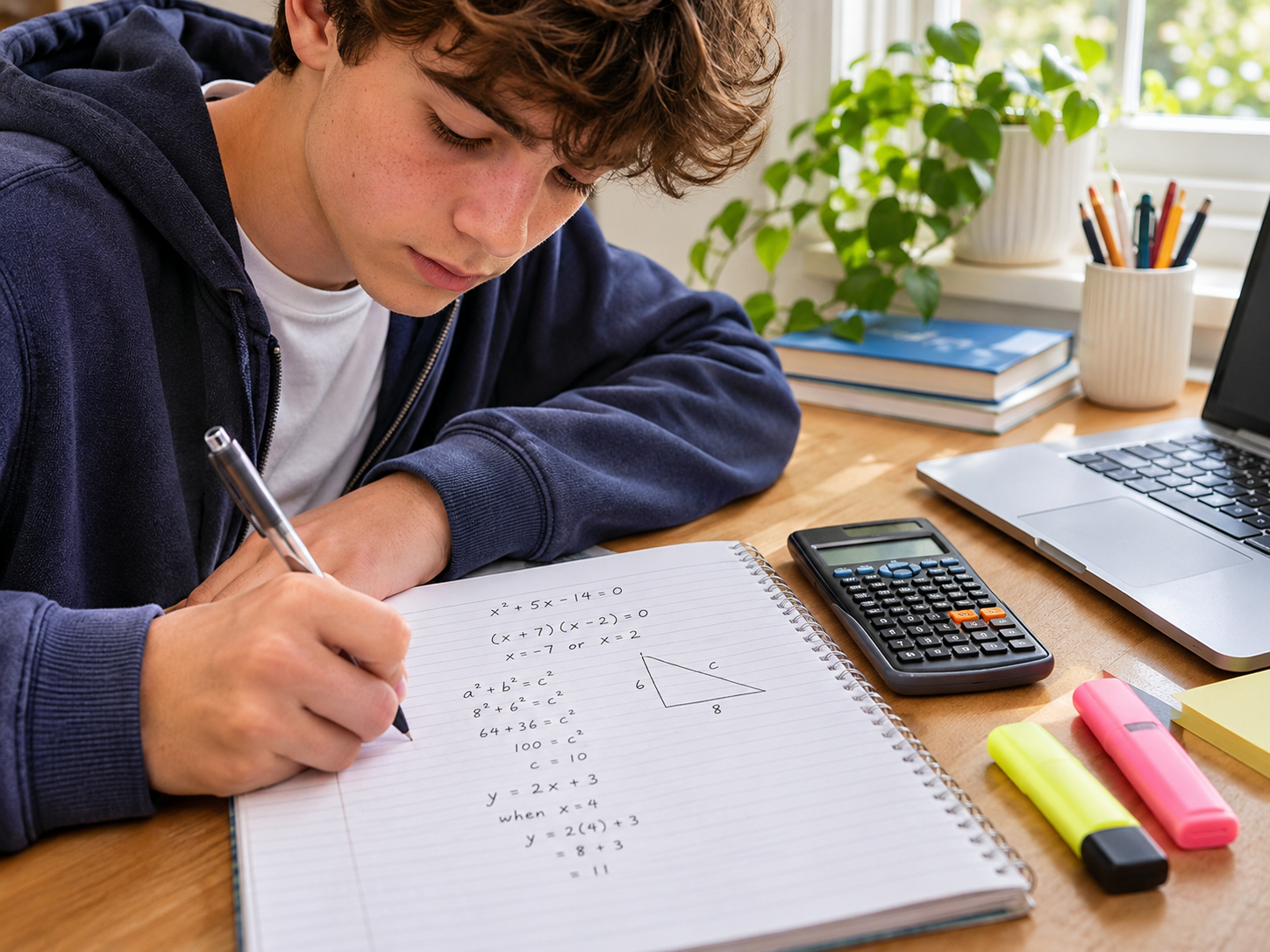
Start With One Difficult Topic
Rather than saying "You need to get better at Maths", ask which particular topics are causing problems.
Algebra? Fractions? Percentages? Geometry?
Choosing one manageable starting point makes the challenge feel less overwhelming.
Find a Clear Explanation
If your teenager doesn't understand something, more independent work may not be the answer.
They may need to watch a lesson, ask a teacher or hear a different explanation before moving forward.
Practise a Few Questions Independently
Understanding an example is only part of learning Maths.
Encourage your teenager to try similar questions without being guided through every step.
Then review the working and identify which steps are secure and which need more explanation.
Revisit Topics Before They're Forgotten
A little regular practice can help students remember and apply what they've learned.
Returning to a topic after a few days can reveal whether the understanding has really stuck.
Notice the Small Improvements
Your teenager might not suddenly jump several grades.
But perhaps they can now solve a question that felt impossible a week ago.
That's progress, and it's worth recognising.
Maths confidence doesn't usually appear all at once. It grows when "I can't do this" gradually becomes "Oh, I understand now!"
GCSE Maths Support That Fits Around Real Life
Maths difficulties don't always happen at a convenient time.
Your teenager might understand something during a lesson, then feel completely stuck when they return to it later.
Level-Up brings together regular live GCSE teaching, recorded lessons and opportunities to ask teachers questions.
Students can use the programme alongside school, revisit explanations and build a manageable learning routine.
And because struggling with Maths can affect confidence too, Level-Up also provides weekly wellbeing support.
- Live GCSE teaching across key subjects, including Maths.
- Every live lesson recorded, so students can revisit explanations.
- Daily opportunities to ask teachers questions.
- Weekly wellbeing support alongside academic learning.
- Tuesday welcome sessions to help new students get started.
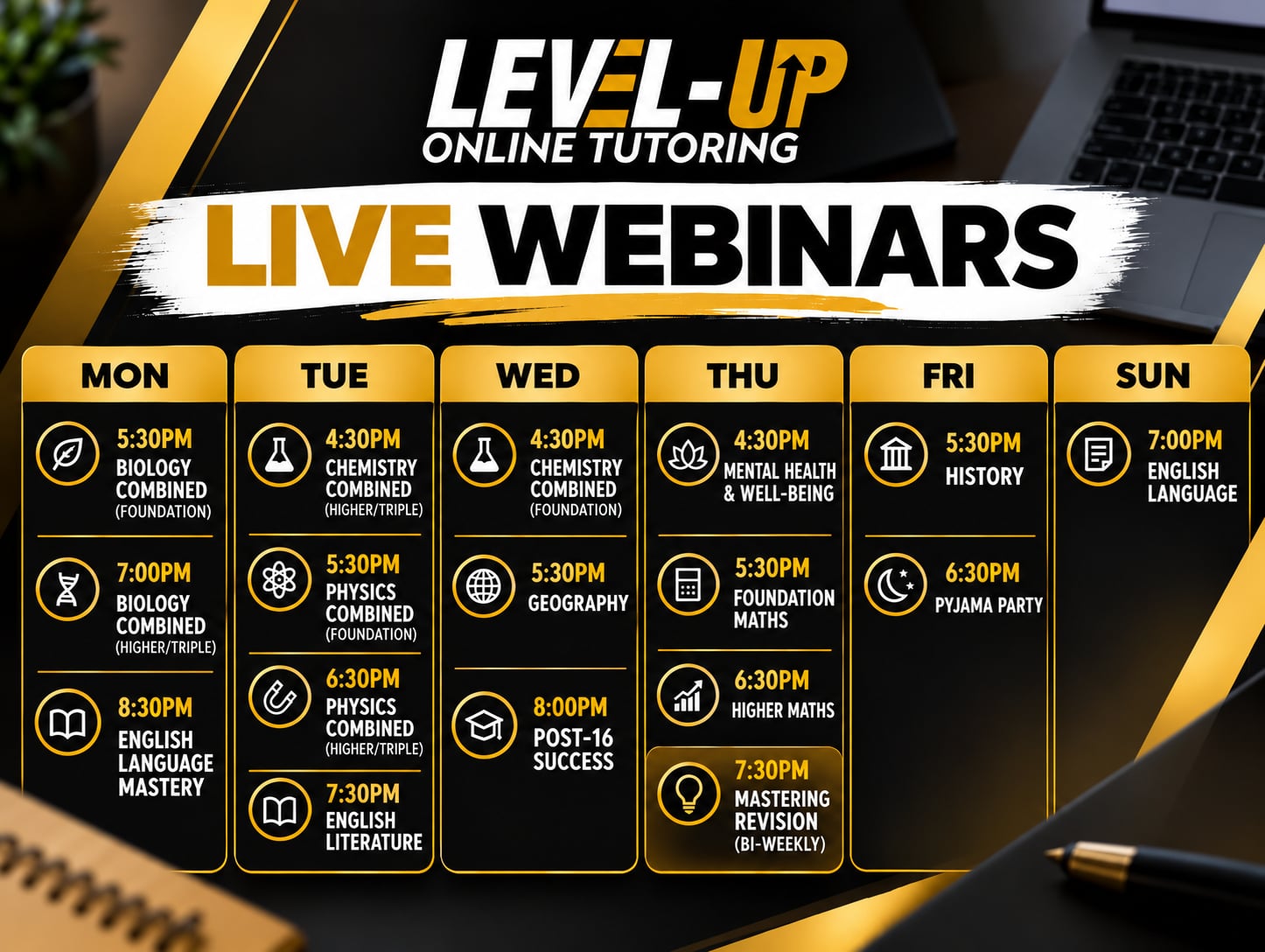
What Could a Week of Level-Up Look Like?
From GCSE Maths to English, Science and wellbeing sessions, Level-Up brings different types of support together in one flexible programme.
What If My Child's GCSE Maths Mock Grade Is Low?
A disappointing Maths mock result can feel particularly worrying during Year 11.
Perhaps your child was expecting a higher grade. Perhaps their confidence has taken a knock.
Or maybe you're wondering whether there's still enough time to make progress.
Mock results are useful because they can highlight the areas where your child needs more support.
But a single assessment doesn't tell you everything about their ability or future progress.
The useful next step is to look at the feedback and identify where additional teaching could help.
Ask Their Maths Teacher:
Which topics are causing the most difficulty?
Are they making mistakes because they don't understand the methods, or because they're finding it difficult to apply them independently?
What should they prioritise over the next few weeks?
If you're concerned about mock results more generally, our Year 11 Mock Exam Support guide explores how to use the feedback constructively.
So, Does My Child Need a Private GCSE Maths Tutor?
Possibly. But not necessarily.
If your child needs intensive individual attention or a highly personalised approach, one-to-one Maths tutoring may be a sensible option.
If they're struggling because they need regular explanations, opportunities to revisit topics and someone to ask when they get stuck, flexible online GCSE Maths support might suit them well.
The key is finding an approach they're comfortable with and likely to use consistently.
And if you're unsure, a trial can be a useful way to explore whether the teaching style works for them.
You can find out more about the wider support available in our Year 11 GCSE Support guide.
Helping Your Teenager Beyond GCSE Maths
Sometimes Maths is the main concern. Sometimes your teenager needs encouragement and support across several subjects.
GCSE Maths Tuition
Discover how Level-Up supports students with GCSE Maths through live and recorded teaching.
Explore Maths Support →Year 11 GCSE Support
Explore ongoing lessons, teacher access and wellbeing support throughout Year 11.
Explore Year 11 Support →GCSE Stress and Wellbeing
Discover how academic teaching and emotional support can work alongside one another.
Explore Wellbeing Support →GCSE Maths Tutor FAQs for Parents
How do I know if my child needs a GCSE maths tutor?
Repeated difficulty understanding topics, declining confidence or limited progress despite regular effort may suggest they need additional support. Ask their Maths teacher which areas need attention, then consider whether one-to-one or online support would fit best.
Is online GCSE Maths help as useful as private tutoring?
Both can be useful, depending on the student. Private tutoring provides focused individual teaching, while a programme of live lessons, recordings and teacher access may suit students who benefit from flexible ongoing support.
Can my child improve GCSE Maths in Year 11?
Students can make progress during Year 11 by identifying knowledge gaps, getting clear explanations, practising regularly and reviewing mistakes. The amount of progress will depend on their starting point, needs and circumstances.
Does my child need to be good at Maths to join online lessons?
No. Students can use online support to develop their understanding of difficult topics. It's important to choose teaching that's appropriate for their current level and exam requirements.
What if my teenager says they're rubbish at Maths?
Try to identify which topics are making them feel that way rather than focusing on the label. Clear explanations, manageable practice and recognising small improvements can help rebuild confidence.
Can they watch online GCSE Maths lessons again?
Yes. Level-Up records its live lessons, allowing students to revisit teaching at a time that suits them and return to explanations when needed.
Can we try Level-Up before deciding?
Yes. Level-Up offers a 7-day free trial through Skool, giving families an opportunity to explore the programme. Check the current terms on Skool before joining.
Your Child Doesn't Have to Keep Struggling With GCSE Maths.
Sometimes the right explanation at the right moment can make a difficult topic feel much more manageable.
Explore Level-Up's live GCSE teaching, recordings and supportive community, and discover whether it's the right fit for your teenager.
Want to hear from other families? Read Our 5-Star Reviews →