


If you’re searching for ways to boost GCSE grades now, you are not alone. When exams are close, many parents start to worry that time is running out and that nothing will make much difference anymore.
But that is not usually true. In the final stretch, small smart changes can still have a real impact. The key is not doing more of everything. It is doing more of what works, and less of what drains time, confidence and energy.
You do not need a complete turnaround plan.
You need a few smart changes that help your teen focus better, revise better and waste less energy.
Can you still boost GCSE grades now?
Yes, often you can. Not by cramming harder or panicking more, but by making a few better decisions about what your teen focuses on each week.
At this stage, improvements usually come from:
- Choosing the right subjects rather than trying to rescue everything at once
- Fixing the mistakes that keep costing marks
- Using revision methods that actively build recall
- Keeping stress low enough for consistency
That is why the final few weeks are not hopeless. They just need a calmer, sharper approach.

When exams are close, better focus and smarter revision can make more difference than simply adding more hours.
5 smart changes that can still boost GCSE grades now
Change 1: Stop trying to fix every subject at once
When teens feel behind, they often jump between too many subjects. It feels productive, but it usually creates shallow revision and more stress.
A better move is to choose one weaker subject with obvious gaps and one subject that is already close where a small push could realistically lift a grade.
Change 2: Replace vague revision with a short list of high-payoff topics
Broad plans like “revise maths” or “go over science” are too vague to create progress. They often leave teens unsure where to begin.
Aim for 6 to 10 key topics per subject. Use mock feedback, teacher comments, or the topics your teen keeps avoiding or getting wrong. Specific revision is much easier to stick to.
Change 3: Swap passive revision for active revision
One of the biggest reasons students feel busy without improving is that they spend too much time on revision that looks good but does not build recall well enough.
Less helpful in the final stretch: rereading notes, highlighting everything, copying things out neatly.
Much more effective:
- Self-testing facts, quotes, formulas and vocabulary
- Answering exam-style questions
- Explaining a topic out loud in simple language
- Watching a short teaching clip, then writing down what they remember from scratch
If you want to spot the difference between real revision and just looking busy, this will help: Is my child really revising for GCSEs or just looking busy?
Change 4: Build quick feedback into every revision week
Marks often improve faster when students know exactly what they are getting wrong and correct it quickly. Without feedback, they can repeat the same errors for weeks.
- After each revision block, identify one mistake or weak spot
- Keep a tiny mistake list rather than trying to remember everything mentally
- Revisit that list twice a week so the same gaps stop coming back
Change 5: Make the plan easier to follow, not more impressive
A huge timetable can look serious, but if your teen cannot stick to it, it quickly becomes discouraging.
A stronger plan is usually simpler: 3 to 5 revision days a week, 2 to 4 short blocks a day, and regular review. Consistency matters far more than creating a perfect-looking schedule.
When exams are close, the goal is not maximum pressure. It is maximum clarity.
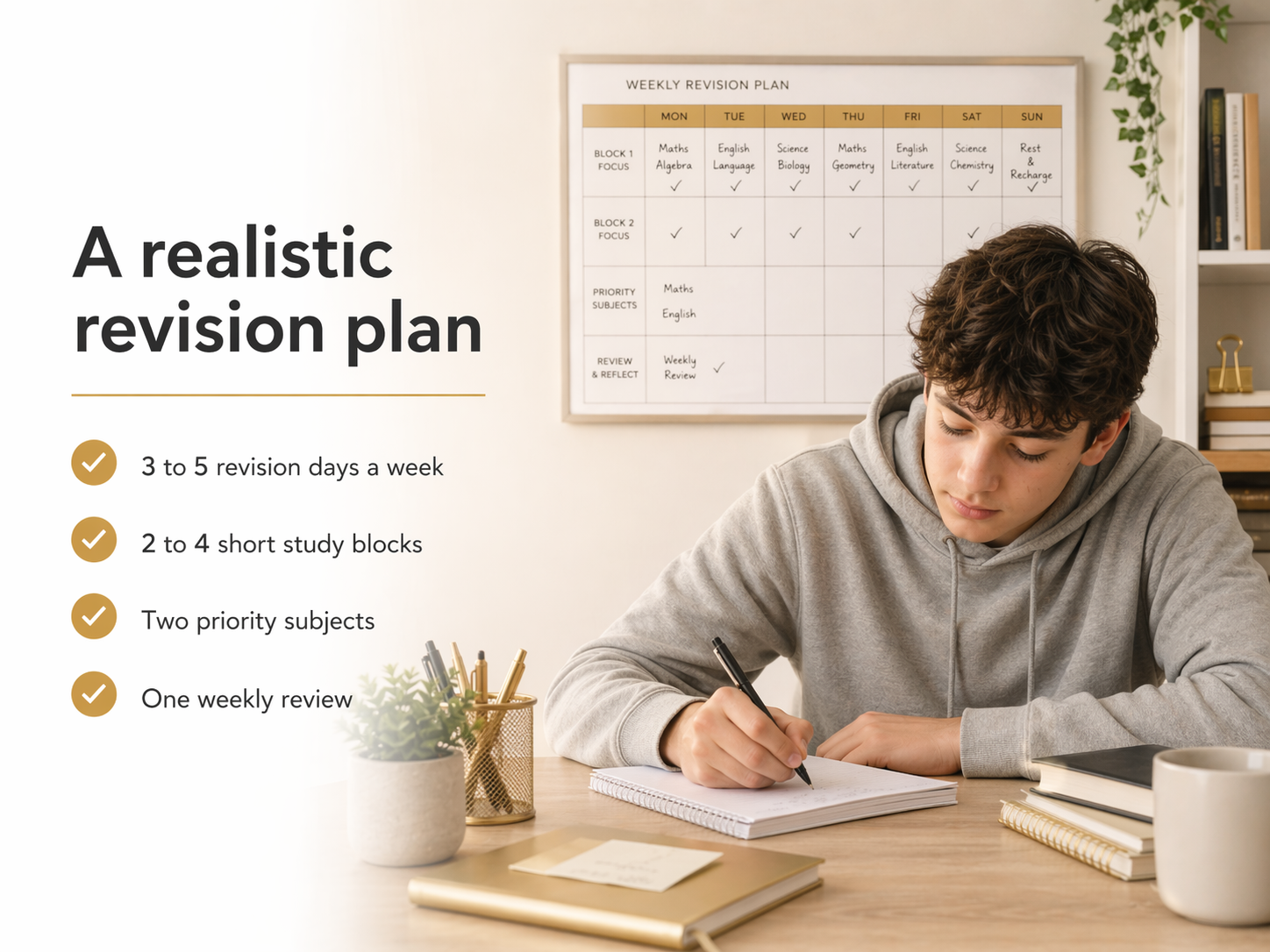
A calm weekly structure helps students stay more consistent and makes last-minute improvement far more realistic.
What does this look like in real life?
If your teen is feeling wobbly, this does not need to become a major family overhaul. The smartest changes are often small and practical.
- Choose two priority subjects for this week
- List the exact topics that need attention
- Use active revision only for the next few sessions
- Track recurring mistakes in one place
- Keep the weekly plan realistic so confidence stays steadier
If you want a broader plan around the final stretch, this blog pairs well with this one: How to Improve GCSE Grades Fast in the Final Weeks.
Parents: you do not have to hold all of this together alone
When exams are close, parents often end up carrying a lot. Encouraging, reminding, organising, calming, checking, and trying not to create more tension at home. That is a heavy role.
This is where Level Up can really help. It gives your teen structure, teaching, encouragement and support inside the programme, so progress does not rely on you trying to manage every part of revision yourself.
Want to see how Level Up works before you decide?
Andy runs a friendly 20 to 30 minute Welcome Session every Tuesday at 7pm (UK time).
Reserve your place for the next Tuesday session
You don’t need to be a member to join. It’s a chance to explore the platform before you decide.

Click the image to explore Level Up on Skool. Support that helps students stay focused, supported and consistent when GCSE exams are close.
Inside Level Up, your teen gets:
- Live teaching throughout the month across key GCSE subjects
- Access to expert teachers for quick help when they are stuck
- On-demand lessons and modules they can revisit anytime
- Mental health and teen hangout sessions to reduce stress and build confidence
- A supportive student community that helps motivation and consistency
If you’d like reassurance from other families, you can read our 5-star reviews here.
Want your teen supported as exams get closer?
Bottom line
If you want to boost GCSE grades now, the answer is not panic or longer hours. It is a few smarter choices: focus on the right subjects, revise the right topics, use active methods, build in feedback, and keep the plan realistic enough to stick.
Mind reading: Last-Minute GCSE Revision: What Matters Most in the Final 30 Days
Also helpful: My Child Thinks It’s Too Late To Do Well In Their GCSEs