


If you’re searching for how to motivate teens to study for GCSEs, you’re in good company. Even the most capable students can lose steam when revision feels endless or overwhelming. The goal isn’t to “force” motivation — it’s to make effort feel meaningful, manageable and rewarding.
Below are simple, science-backed ways to help your teen build consistent habits — and how Level-Up’s structure, community and rewards system keep them going on the tough days.
Start with “Why”: Make the Goal Feel Real (and Personal)
Motivation grows when effort feels connected to something your teen actually cares about — not just grades or exam results. Instead of saying “You need this for the future,” help them imagine how feeling capable could change their confidence day to day.
Try asking questions that spark curiosity rather than stress:
- “Which subject makes you feel most proud when you understand it?”
- “What would make revision feel easier — or even fun?”
- “If you could walk into your GCSEs calm and prepared, what would that feel like?”
- “What would you like your choices to look like after GCSEs — college, travel, creative projects, a job you enjoy?”
These questions shift the conversation from pressure to purpose. It’s not about chasing perfection — it’s about helping them see how learning supports the life they want to build, one step at a time.

Build a Routine That Doesn’t Feel Punishing
Teens don’t need marathon study days. They need a rhythm they can stick to. A great starter plan is the 45/15 method: 45 minutes focused, 15 minutes break (movement, snack, reset). Add one or two of these blocks after school and one at the weekend.
For more on pacing, see our guide on how much GCSE revision per day.
Make Progress Visible (and Rewarded)
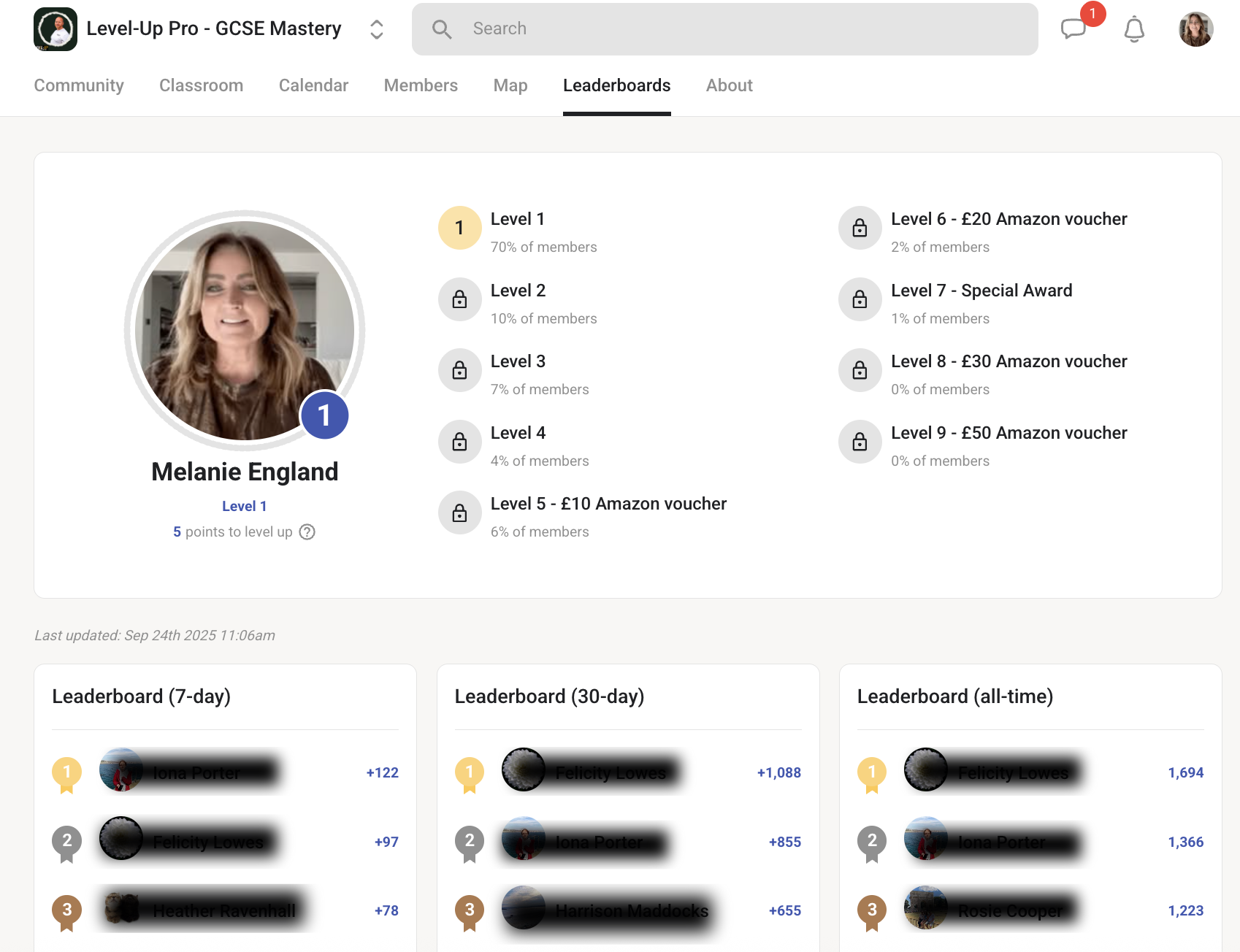
The brain loves progress bars, streaks and rewards. That’s why Level-Up uses points, badges and recognition to keep teens engaged. When effort is noticed and celebrated, students return tomorrow with more energy.
Swap “Tell Me” for “Show Me” Teaching
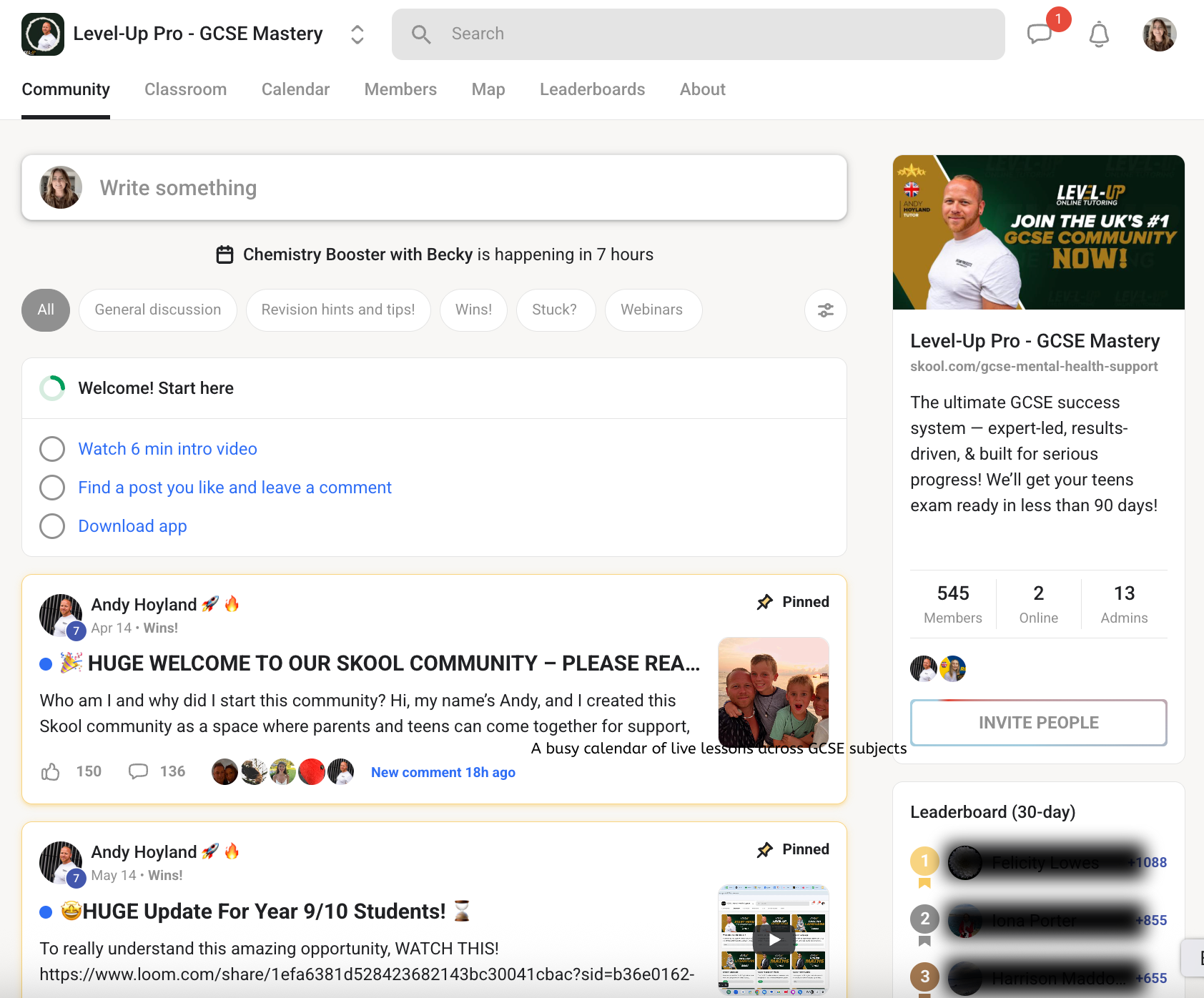
Motivation collapses when students feel stuck. Fast feedback brings it back. In Level-Up, teens can ask a question in the community and get a teacher’s reply quickly — so they don’t sit with confusion for days. That relief turns into renewed effort.
Use Accountability Without Arguments
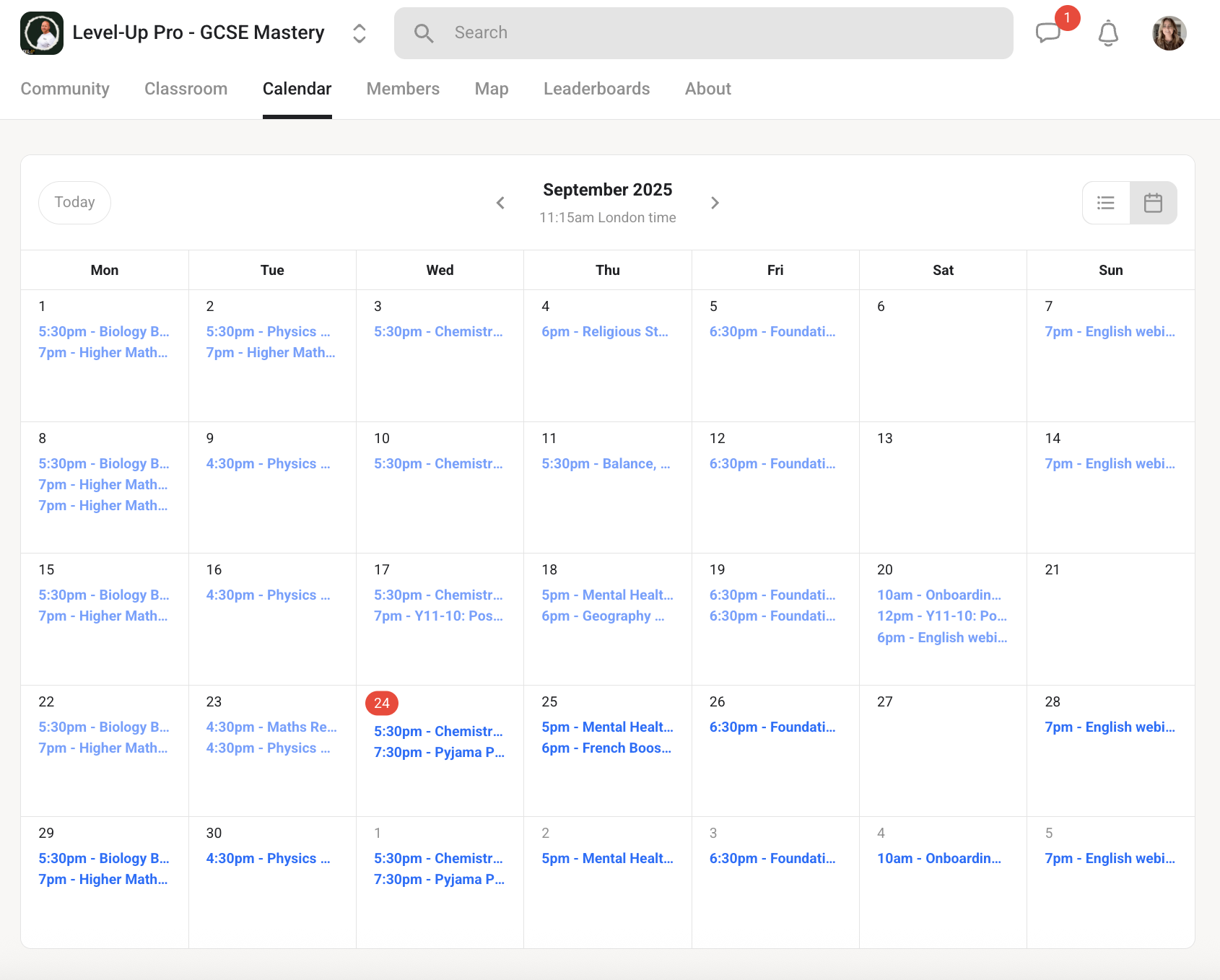
External accountability can be a superpower. Weekly live lessons create a natural “nudge” to show up, and replays mean nothing’s lost if life gets busy. Parents become allies, not referees.
Language That Helps (and Words to Avoid)
How we talk about revision matters. Try these swaps:
- Instead of “You’re behind,” try “Let’s pick one topic to feel good about today.”
- Instead of “Revise for three hours,” try “Two focused blocks, then we’ll review how it went.”
- Instead of “Why didn’t you…,” try “What got in the way — and what would help next time?”
When Motivation Drops, Check Wellbeing First
Sometimes the best way to motivate teens to study for GCSEs is to step back. Tiredness, anxiety and comparison can drain the will to try. If your teen feels low, this post on how to help teen mental health will help you support them kindly and practically.
Why Level-Up’s Model Keeps Teens Going
- Live lessons + replays reduce fear of “missing out” and make catch-up simple.
- Ask-anytime community turns roadblocks into quick wins.
- Rewards & recognition make consistency feel good.
- Wellbeing sessions support confidence, calm and resilience.

Want the full picture? See how the programme works and browse our 5-star reviews.
Bottom Line: Make It Small, Make It Daily, Make It Supported
If you’re wondering how to motivate teens to study for GCSEs, remember: motivation follows action. Keep steps small, keep routines steady, and make sure support is always within reach. That’s how effort becomes results — and how confidence grows.
✅ Ready to turn “I’ll start tomorrow” into steady progress?
Related reading: How much GCSE revision per day?
Also helpful: How to help teen mental health during GCSEs