


If you’re searching for how to reduce GCSE stress and anxiety for teens, you’re not alone. Most parents can see their child is under pressure, but aren’t always sure how to help without adding more stress. This post is all about simple, practical ways to calm things down at home, so your teen can feel safer, more supported and better prepared for their exams – without turning your house into a pressure cooker.
What we’ll cover (in plain English)
- Why GCSE stress and anxiety show up in the first place.
- Signs your teen might be struggling (even if they say they’re “fine”).
- Simple ways to calm the home environment during GCSEs.
- How to talk about exams without triggering panic or shutdown.
- Practical tools teens can actually use when they feel overwhelmed.
By the end, you’ll have a clear plan for reducing GCSE stress and anxiety at home, plus an option for extra support if your teen would benefit from a calm, structured community like Level-Up Online Tutoring.

GCSE stress is common – but there’s a lot you can do at home to make it feel lighter.
Why GCSE Stress and Anxiety Are So Common
GCSEs arrive at a time when teens are juggling a lot: changing friendships, social media, hormones, and questions about the future – on top of schoolwork. Add in talk of “these exams decide everything” and it’s no surprise many feel overwhelmed.
Stress isn’t always bad – a bit of “nervous energy” can help them focus. Anxiety becomes a problem when it feels constant, or starts to affect sleep, appetite, mood or motivation.
Signs Your Teen Might Be Struggling (Even if They Say They’re “Fine”)
Every teen is different, but common signs of GCSE stress and anxiety include:
- More tears, snappiness or going quiet than usual.
- Trouble falling asleep or waking up very early.
- Headaches, stomach aches or feeling “sick” before school or exams.
- Procrastinating revision because it feels overwhelming.
- All-or-nothing talk: “I’m going to fail everything” / “What’s the point?”.
Not all of these mean there’s a serious problem, but they are signals that your teen might need more support, reassurance or structure.
Step 1: Make Home Feel Safe, Not Stressful
The most powerful way to reduce GCSE stress and anxiety is to make home feel like a safe base, not another exam hall.
- Lead with listening: start with “Talk to me – what’s feeling hardest at the moment?” rather than jumping straight to solutions.
- Validate before you fix: “It makes sense you feel stressed, there’s a lot going on” calms the nervous system more than “Don’t worry, you’ll be fine”.
- Separate them from the grades: remind them often that their worth as a person doesn’t depend on exam marks.
When teens feel emotionally safe, they’re far more able to engage with revision and ask for help when they need it.
Step 2: Make Exams Feel Smaller and More Manageable
Stress grows when everything feels huge and undefined: “GCSEs”, “all my subjects”, “the future”. You can help reduce anxiety by making things smaller and clearer.
- Use a simple GCSE revision timetable so they can see what’s happening week by week.
- Break big tasks into tiny steps: “Revise the heart in Biology” instead of “Revise Science”.
- Look at the exam calendar together so there are no surprises – then focus on the next one or two, not all of them at once.
This shift from “all of GCSEs” to “just the next small step” is one of the quickest ways to calm exam anxiety.

Planning together reduces the unknowns – and that alone can lower GCSE stress and anxiety.
Step 3: Talk About Exams Without Triggering Panic
It’s easy for well-meaning questions to pile on pressure. A few small tweaks can make a big difference to how your teen hears you.
- Swap “Have you revised?” for “What’s your plan for today?” – it sounds more supportive and less like checking up.
- Focus on effort, not just outcome: “I’m proud of how you stuck with that session” instead of only talking about grades.
- Avoid comparison: try not to mention what siblings, cousins or friends are doing – it usually increases anxiety, not motivation.
Keeping the tone calm and practical helps your teen’s brain stay in “problem-solving” mode instead of spiralling into “I can’t cope”.
Step 4: Build Simple Calming Habits Into the Day
Teens don’t need a complicated wellness routine. A few simple habits, done regularly, can lower GCSE stress and anxiety more than you’d think:
- Movement: a 10–15 minute walk, stretch or quick game with a sibling can reset their nervous system between revision blocks.
- Breathing: try “in for 4, out for 6” a few times before starting revision or going into school.
- Environment: clear desk, water nearby, phone off the table – fewer distractions, calmer mind.
- Short breaks: a proper break every 25–30 minutes helps prevent overwhelm and burnout.
The NHS also has a reassuring guide on how to help your child beat exam stress if you’d like more ideas.
Step 5: Put Healthy Boundaries Around Screens and Sleep
Phones and late nights are two of the biggest drivers of GCSE stress and anxiety for teens.
- Agree a “screen off” time: ideally 30–60 minutes before sleep to give their brain a chance to wind down.
- Keep phones out of bed: charging in another room can help them fall asleep faster and sleep more deeply.
- Have clear “no exam talk” times: for example at dinner or after 8pm, so there’s space in the day that feels exam-free.
Good sleep doesn’t just improve mood – it also helps the brain store what they’ve revised, so they get more from the work they’re already doing.
Step 6: When Extra Support Can Really Help
Sometimes, even with the best routines and support at home, GCSE stress and anxiety still feel heavy – especially if your teen has gaps in knowledge or low confidence from Year 10.
That’s where an external support system can make a huge difference. In the Level-Up GCSE Support Community, students get:
- Over 32 live tutoring and support sessions a month across core GCSE subjects and wellbeing.
- On-demand lessons – every live class is recorded so they can revisit it anytime.
- Pre-recorded modules and expert video courses so they can learn at their own pace without hunting through old exercise books.
- Support from tutors inside the community, live, when they’re stuck or worried about a topic.
- Mental well-being & teen hangout sessions to reduce overwhelm and build friendships.
- A smart rewards system and leaderboard to keep students engaged and moving forward.
Level-Up is designed to give teens structure, flexibility and real human support in one place. Membership is capped at 1,000 students so they don’t get lost in a crowd, and there are no long-term contracts or hidden commitments – you can cancel whenever you like. If you’d like to see how other families have found it, you can read our 5-star reviews here.
If you want a clearer look before joining, you can also come along to a 30-minute Intro Session with Andy (usually every other Saturday at 10am on Google Meet), where he walks you through how to join live classes, find resources quickly and use the rewards system. Just email level-uponlinetutoring@outlook.com to check the next date.
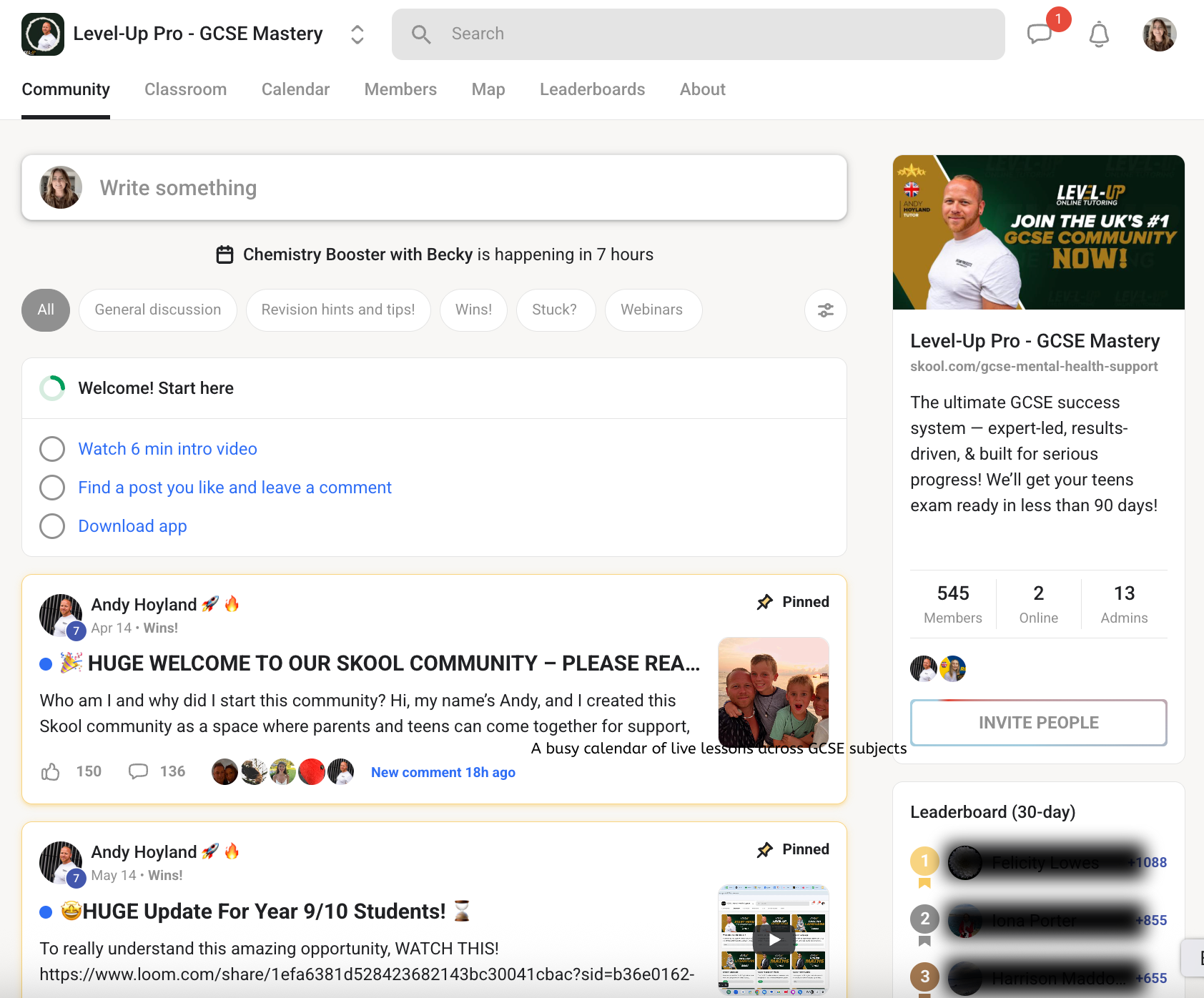
A calm, structured community helps teens feel less alone with GCSE stress and anxiety.
Why Level-Up Helps Reduce GCSE Stress and Anxiety
If your teen is feeling overwhelmed, the Level-Up programme is designed to lower stress, not add to it. Students get:
- Step-by-step guidance instead of “revise everything and hope for the best”.
- Live and on-demand lessons they can fit around clubs, family life and energy levels.
- Teacher support when they’re stuck, so worries don’t snowball in silence.
- A friendly community where effort is celebrated, not just grades.
- Tools for planning, revision and mindset – so they feel more in control of their GCSE journey.
✅ Want your teen to feel calmer and more supported through GCSEs?
Bottom Line
GCSE stress and anxiety are common – but they don’t have to take over family life. With a calmer home environment, realistic plans, simple calming habits and the right support, your teen can move through exam season feeling more grounded, confident and capable.
Mind reading: How much GCSE revision per day?
Also helpful: Best GCSE revision timetable for busy families