


If your teen is approaching their Year 10 mock exams, this is actually a huge opportunity, not a disaster waiting to happen.
Many families treat Year 10 as “practice” and only start taking GCSE revision seriously in Year 11. But the students who cope best in Year 11 are usually the ones who build strong habits, routines and confidence earlier.
Year 10 mocks are not about perfection.
They are the best chance to build GCSE habits before Year 11 pressure arrives.
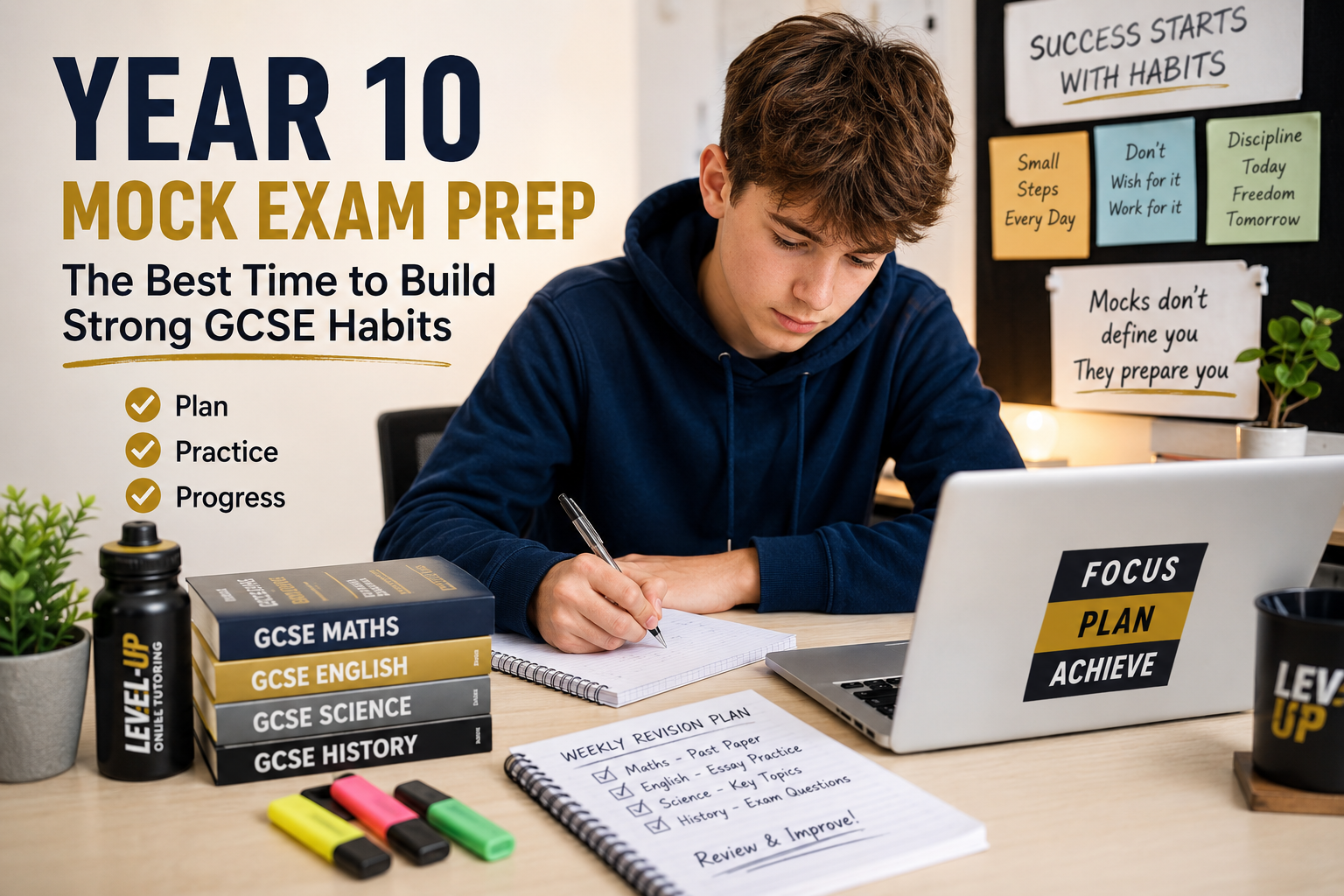
Good GCSE habits built in Year 10 reduce panic and pressure later in Year 11.
Why Year 10 mocks matter more than most parents realise
Mocks are not just about grades. They reveal:
- How your teen revises when left independently
- Which subjects they avoid or procrastinate on
- Whether they know how to revise actively
- How they respond emotionally under pressure
That information is incredibly valuable before the real GCSE year begins.
It is much easier to improve routines in Year 10 than to try and rebuild confidence during Year 11 panic.
The best Year 10 mock exam prep plan (4 steps)
Step 1: Focus on consistency, not intensity
Students do not need to revise for hours every night in Year 10.
The real goal is building routines that feel sustainable and repeatable.
- Short focused sessions work better than marathon revision
- 2 to 3 revision days a week is enough to build momentum
- Simple routines build confidence faster than pressure does
Step 2: Teach active revision early
Many Year 10 students still think revision means reading notes or highlighting textbooks.
But strong GCSE students usually revise actively:
- Self-testing
- Explaining topics aloud
- Answering questions from memory
- Correcting mistakes quickly
This post also helps: Is my child really revising for GCSEs or just looking busy?
Step 3: Use Year 10 mocks as feedback, not judgement
A lower mock grade does not mean your teen is failing.
It simply shows where support, structure or better revision habits are needed before Year 11.
- Which subjects create the most stress?
- Which topics keep coming up as weak areas?
- Where does confidence drop fastest?
Step 4: Build support before Year 11 pressure hits
The best time to build support systems is before panic arrives.
- Strong routines reduce future overwhelm
- Confidence grows through consistency
- Students cope better when they know help is available quickly

Simple routines and structure in Year 10 make Year 11 feel far more manageable.
A simple Year 10 revision routine that works
The best revision plans for Year 10 students are realistic, not extreme.
- 2 to 3 revision evenings each week
- 25 to 40 minute focused blocks
- One subject per session
- Short review of mistakes at the end of each week
The goal is not pressure. The goal is familiarity, confidence and consistency.
Busy parents: you do not need to become the revision manager
One of the biggest causes of stress in Year 11 is when parents feel responsible for constantly checking revision, motivating their teen and managing every subject.
This is where Level Up helps early: students get structure, teaching, accountability and support before Year 11 pressure really kicks in.
Want to see how Level Up works before Year 11 begins?
Andy runs a friendly 20 to 30 minute Welcome Session every Tuesday at 7pm (UK time).
Reserve your place for the next Tuesday session
You do not need to be a member to join. It’s a chance to explore the platform before you decide.

Click the image to explore Level Up on Skool and help your teen build stronger GCSE habits early.
Inside Level Up, students get:
- Live teaching throughout the month across key GCSE subjects.
- Access to expert teachers for quick support when stuck.
- On-demand lessons and modules available anytime.
- Mental health and teen hangout sessions that reduce overwhelm.
- A supportive student community that builds motivation and consistency.
If you’d like reassurance from other families, you can read our 5-star reviews here.
Want your teen building stronger GCSE habits before Year 11?
Bottom line
Year 10 mock exam prep is not about creating pressure early. It’s about building routines, confidence and strong GCSE habits before Year 11 becomes intense. Small consistent habits now can completely change how your teen experiences the GCSE years.
Mind reading: How to Improve GCSE Grades Fast in the Final Weeks
Also helpful: How to Help With GCSE Revision Without Nagging